Call For Papers (2/2): Arts-based and experimental methods in geographical investigation, CIG 2026

This year’s Conference of Irish Geographers will be hosted by University College Cork, Department of Geography with the theme ‘Connected Environments: Integration and Resilience’, on the 6th – 8th May 2026: https://www.conferenceofirishgeographers.ie 

The DataStories team is organising a session entitled: Arts-based and experimental methods in geographical investigation 

Within academia there has been an increase in and acceptance of projects that propose using arts-based and experimental methods to respond to global challenges that require reimagining, reinventing and reorganising approaches to research. In this session we seek to uncover the diverse forms of arts-based and experimental methods used in geographical investigation. We are looking for researchers who are currently engaged in research projects that adopt creative methods. Collectively, we aim to theorise the transformative potential of such methodologies for addressing pressing social, economic and environmental concerns. Beyond considering the benefits of creative methodologies, we are also interested in comprehending the challenges which emerge when incorporating creative methods into research inquiry and the ways we might mitigate or soften possible obstacles to such engagements. 

We invite discussions on the use of arts-based and experimental methods including, but not limited to: 

  • The new and hybrid methods emerging in geography (and cognate disciplines)
  • How different cultural and geographical contexts influence selected methods
  • How specifically arts-based and experimental methods generate new ways of seeing,  understanding and acting
  • Limitations and challenges of using arts-based and experimental methods
  • How creative methods can be used to co-create with stakeholders outside of the discipline and sector
  • Misuse of and ethics around arts-based and experimental methods 

Session organisers: Juliette Davret, Oliver Dawkins, Carla Maria Kayanan, Rob Kitchin and Samuel Mutter
Maynooth University Social Sciences Institute/Department of Geography, Maynooth University 

Please submit abstracts (no more than 250 words) for this special session to Carla Maria Kayanan (carla.kayanan@mu.ie) by 15 March. We will alert you on the outcome of your abstract by 20 March to give you sufficient time to upload your abstract to the CIG portal before it closes on 27 March. 

For a copy of the CFP flyer for this session, click here: PDF

To view the other session we are organising, click here: Call For Papers (1/2): Geographers in the policy arena: Building bridges between academia and evidence-based policymaking, CIG 2026

Want to share this? (click + below for more options)

Call For Papers (1/2): Geographers in the policy arena: Building bridges between academia and evidence-based policymaking, CIG 2026

This year’s Conference of Irish Geographers will be hosted by University College Cork, Department of Geography with the theme ‘Connected Environments: Integration and Resilience’, on the 6th – 8th May 2026: https://www.conferenceofirishgeographers.ie 

The DataStories team is organising a session entitled: Geographers in the policy arena: Building bridges between academia and evidence-based policymaking 

Geographic knowledge is essential for addressing contemporary policy challenges, from climate adaptation and spatial justice to urban resilience and resource management. Yet, significant gaps often exist between the production of geographic research and its effective uptake in policy processes. This session examines how geographers navigate the complex landscape of evidence-based decision-making and explores strategies for strengthening the science-policy interface.  

We invite contributions that critically examine the relationship between policymaking (in both public and private sectors) and the use of geographical knowledge. Of particular interest are perspectives that interrogate power dynamics in knowledge production and the politics of “evidence” itself.  

Topics may include, but are not limited to:  

  • institutional barriers and facilitators to evidence uptake in policymaking
  • increased role of consultants in policymaking
  • the evolution of GIS from data visualisation tools to strategic policy design instruments
  • challenges around what does and does not qualify as evidence for policymaking
  • participatory approaches to geographic knowledge production
  • the use of emerging technologies (e.g. AI-enhanced spatial analytics) in reshaping the evidence base available to policymakers.  

This session aims to share lessons learned from geographers working at the science-policy interface and to build practical frameworks for research-to-policy translation.  

Session organisers: Juliette Davret, Oliver Dawkins, Carla Maria Kayanan, Rob Kitchin and Samuel Mutter
Maynooth University Social Sciences Institute/Department of Geography, Maynooth University  

Please submit abstracts (no more than 250 words) for this session to Juliette Davret (juliette.davret@mu.ie) by 15 March. We will alert you on the outcome of your abstract by 20 March to give you sufficient time to upload your abstract to the CIG portal before it closes on 27th March. 

For a copy of the CFP flyer, click here: PDF

To view the other session we are organising, click here: Call For Papers (2/2): Arts-based and experimental methods in geographical investigation, CIG 2026

Want to share this? (click + below for more options)

Workshop Overview: Boundary Concept in the Age of Datafication

On February 19 and 20, 2026, Juliette Davret participated in a workshop on Boundaries & boundary concepts in/as datafication organised by Yana Boeva, Louis Ravn and Sarah Davies at the University of Amsterdam. This workshop explored how boundary concepts, particularly boundary objects and boundary infrastructures from Science and Technology Studies (STS), need to be reconceptualised in the age of datafication.  

The workshop brought together researchers to examine how the concepts of boundary work, infrastructure and objects are being transformed by contemporary datafication processes. The gathering created space for sustained engagement with both theoretical frameworks and empirical case studies that illuminate these transformations.  

The workshop unfolded across multiple thematic sessions over two days. The first session, titled “Boundaries, Environment and the Urban”, featured two presentations grounded in case studies of digital tools deployed in urban contexts. These presentations examined how digital technologies reconfigure urban governance and spatial boundaries.    

The second session turned attention to “Boundary Concepts, Professional & Science Practice, AI”, presenting three papers that investigated how AI, synthetic data and datafication reshape professional knowledge practices and scientific boundary work. This session examined the changing nature of expertise and authority in data-intensive environments.  

The third session of the opening day focused on “Boundary Work and the State”, featuring two presentations that explored how state institutions mobilise and are transformed by boundary-making practices in datafied governance contexts.  

The second day opened with a session on “Borders and Identities”, which included three presentations. Among these, Juliette presented her research on data intermediaries and the reconstruct ion of boundaries through labour, territorial and epistemic reconfigurations. Her case study examined planning data flows in Ireland, demonstrating how data intermediaries actively reshape the boundaries between different domains of governance and knowledge.  

The workshop concluded with a final session on “Boundary Objects and Infrastructures” featuring three presentations that examined how boundary objects scale up into infrastructures and what analytical and political implications follow from this transformation.  

Throughout the two days, the workshop structure allowed extensive time for engaging with each paper presented, as well as for collective theoretical reflection on boundary concepts. The workshop participants identified the need to collectively determine which aspects of boundary concepts in datafication contexts warrant further development.

Want to share this? (click + below for more options)

New paper: The temporal organisation and practices of planning work

The project has a new paper published in Studi Organizzativi. 

Kitchin, R., Davret, J., Kayanan, C.M. and Mutter, S. (2025) The temporal organisation and practices of planning work: The temporalities of digital infrastructure, the digital infrastructuring of temporality. Studi Organizzativi 2(2025): 180-204.

An open-access, post-print version is available on MURAL

Abstract

Digitalisation is having a profound impact on the relationship between time and planning. The temporalities of planning’s bureaucratic infrastructure is being transformed through its digitalisation, introducing machine and network time and reshaping the relations between past, present and future. In turn, the temporalities of digital infrastructure has led to re-infrastructuring of planning’s temporalities, introducing a new timescape wherein the pace, tempo, timings, time patterns and temporal modalities of planning practice have been reconfigured. Yet, despite the profound effect of digitalisation on temporal relations, clock time remains important in the organisation and work of planning given the centrality of time rules and timetables, and this will continue to be the case. Using a case study of the development and control function of planning in Ireland, this paper examines temporalities of planning’s digital infrastructures and the digital infrastructuring of planning’s temporalities, illustrating the ways in which the temporal organisation and practices of planning work are being re-cast.

Want to share this? (click + below for more options)

3D Printed Model of Cork City Goes Home

We’ve previously shared stories about exhibiting our 3D printed model of Dublin at the Synthetic Cities conference and Dublin’s Beta Festival of digital arts. However, for the last few years we’ve also had a 3D printed model of Cork stored in our lab. Last week the model of Cork finally went to a new home at the library at University College Cork (UCC).

Both models were originally created as part of the Building City Dashboards project. The original plan had been to display both models together for an end of project exhibition but this was prevented when the Covid-19 pandemic struck. After the pandemic we adopted the Dublin model and we’ve been seeking a home for the Cork model ever since.

Last year researcher Maedhbh Nic Lochlainn joined UCC as a lecturer in Human Geography and GIS. As a friend of the Data Stories project, Maedhbh had a good understanding of the model’s value, and this made her the perfect person to adopt and champion it. Maedhbh secured funding to have the model mounted for display by the same team at Display Contracts who prepared the Dublin installation for Data Stories.

Before Christmas I visited the Display Contracts workshop in North Dublin to see the model being prepared. Like it’s Dublin sibling, the Cork model measures 3.5 x 2 metres and covers 28sq km of the city. The key difference between the two is Cork’s hilly terrain. This makes the Cork model significantly thicker and bulkier. Despite the challenge, Display Contracts handled the job expertly.

The piece was delivered to UCC and assembled in the university library last Friday. Students and visitors will be able to explore Cork’s urban landscape in miniature there.

Want to share this? (click + below for more options)

New paper: The Politics of Counting Homelessness: The Case of Ireland

The project has a new paper published in Housing Policy Debate. 

Davret, J. (2026). The Politics of Counting Homelessness: The Case of Ireland. Housing Policy Debate, 1–24. https://doi.org/10.1080/10511482.2025.2599125 

An open-access, post-print version is available on MURAL  

Abstract  

Homelessness remains a critical social issue in Ireland, yet its true scale is systematically obscured by definitional limitations, methodological inconsistencies, and political interference in data collection. While official statistics reported 16,058 individuals relying on emergency accommodation as of July 2025 (a rise of +244% since July 2015), this figure excludes substantial populations: rough sleepers, domestic violence survivors, asylum seekers, and those experiencing hidden homelessness through enforced parental co-residence. This article examines the politics of homelessness enumeration through a critical analysis of seven data sources, policy documents spanning 2014–2025 and stakeholder interviews. The study reveals how Ireland’s measurement system exemplifies the political life of numbers. The analysis exposes five interconnected dimensions of measurement failure: fragmentation of sources and measurement approaches, methodological inconsistencies that undermine longitudinal analysis, systematic undercounting that renders substantial populations invisible, documented political manipulation and data integrity concerns, and structural barriers that impede comprehensive data collection and analysis. The findings demonstrate how apparently technical decisions about data collection and analysis become sites of political contestation. The research reveals the measurement politics in contemporary welfare states, demonstrating the need for inclusive frameworks, integrated systems, and transparent practices that prioritize social justice over administrative convenience. 


Want to share this? (click + below for more options)

New paper: The digital turn in planning and the production of ‘good enough’ planning systems

The project has a new paper published online first in European Planning Studies.

Kayanan, C., Mutter, S., Davret, J. and Kitchin, R. (2025, online first) The digital turn in planning and the production of ‘good enough’ planning systems. European Planning Studies. doi: 10.1080/09654313.2025.2599869

An open access, post-print version is available on MURAL

Abstract

The digitalization of planning has taken place in a context where planning work is on-going and cannot be halted, and in which there are embedded institutional and technical systems and practices, as well as a number of technical, regulatory and sociocultural data frictions. This context has led to a sub-optimizing approach to digitalization. In this paper, we examine the digital mediation of planning through an in-depth case study of a multiscale planning development and control data ecosystem in Ireland. We detail the incrementalist nature of the digital turn in planning and how this institutionalizes a ‘good enough’ digitalized planning system; that is, a system that is functional and performs essential tasks, but not necessarily in an optimal manner and which is always open to potential improvements. We develop a conceptual basis for assessing ‘good enough’ and
through its application contend that ‘good enough’ planning is a sufficient and reasonable state of affairs given the substantive challenges of creating and maintaining a complex data
ecosystem and that there are incremental limits to achieving ‘better planning’. As such, any technological solutionist claims promising to radically reconfigure and fix planning’s operation shortcomings, such as the introduction of artificial intelligence tools, require careful assessment.

Want to share this? (click + below for more options)

Housing and planning publications hub for Ireland

We have assembled over 1,800 academic, policy and sector publications relating to housing, property and planning in Ireland, which can be accessed via our publications hub at Zotero.

While we are collecting PDFs of these publications locally, we are only making the references accessible at present due to copyright issues. The database is inevitably partial and if there are publications missing which you would like us to add, please send them to us and we will do so.

Many thanks to Mick Byrne, Lorcan Sirr and Richard Waldron for sharing their reference libraries to aid the database construction, and to Lorena Borges Dias, Kerry-Ann D’Arcy and Elina Micah Musa for working on compiling the hub.

Danielle Hynes and Rob Kitchin, Data Stories project

Want to share this? (click + below for more options)

Data Stories at the Digital Geographies conference in Lisbon

Earlier this month, Danielle and Sam travelled to Lisbon to attend the Digital Geographies conference. This was the fourth edition of Digital Geographies, and the theme for 2025 was ‘Artificial Geographies: opening the black box for a new wave of critical thinking’. The conference examined the ways digital technologies are reshaping territories, and the implications and challenges of this for governance, inequality and more.

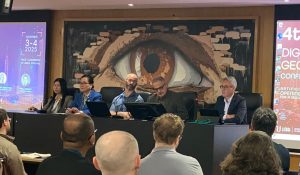
 Image: the conference opening panel of Yanliu Lin, Chun Yang, Dylan Brady, Mario Vale (chair) and Paulo Morgado
Danielle and Sam organised a session titled ‘Data Voids: Understanding Digital Geographies of the Built Environment through Negativity and Refusal’. You can read the full call for papers here. The session was generative and sparked discussions across a range of fields, with presentations from Shahriar Khonsari and Lin Zhang. Khonsari examined silences and absences in the system, conceiving of them not as gaps or errors, but as voids that are actively produced for different reasons. Looking at the context of Iran, Khonsari argued that, on the one hand, the state uses invisibility as a weapon to delegitimise marginal communities, and that, on the other hand, citizens actively erase themselves to survive. Khonsari looked at the example of informal settlements in Iran, and spoke of the act of building an illegal home as committing an act of data refusal through creating a data void.

Lin Zhang discussed initial findings from the UKRI/ERC-funded GENERATE project, led by Prof. Saska Petrova. The project aims to offer original insights into the social, spatial, and political inequalities that drive energy related injustices, and struggles linked to the growth of new low-carbon energy production in disadvantaged regions and communities. Zhang applied the ideas of data feminism (a way of thinking about data, both their uses and their limits, that is informed by direct experience, by a commitment to action, and by intersectional feminist thought) to both survey and critique existing quantitative research into energy poverty.

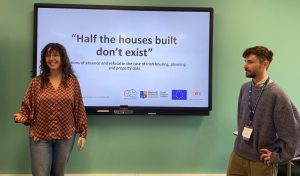
In their own presentation, Danielle and Sam examined the potentialities and possible contradictions of bringing together ideas of critical refusal and negative geographies, articulating these concepts through examples drawn from the Data Stories project. Firstly, they discussed the relationships between data and the politics of land and property, considering how attempting to grasp the world through data always also means contending with absences of various kinds. Secondly, they proposed critical refusal as a tool and practice which holds promise in responding to data harms, with capacity to shape the production of existing and possible alternative trajectories.Image: Danielle Hynes and Samuel Mutter present “Half the houses built don’t exist”: Questions of absence and refusal in the case of Irish housing, planning and property data at Digital Geographies
Danielle and Sam concluded that, while the two concepts have divergent foci, there is value in considering negative geographies together with refusal. Where negative geographies invites researchers to stay with absences, gaps, voids and shadows, resisting the impulse to quickly resolve them, one key aspect of critical refusal is its generative potential. As such, it was proposed that, in the spaces of negative geography, areas for refusal may emerge.

They closed with a series of questions which remain open-ended: Could the framing of negative geographies attune us to imagining systems that could build on or even expand existing absences in ways that lead to more just alternatives? Could this assist us in avoiding what, in the context of prison and police abolitionism, is widely referred to as ‘reformist reforms’ (those that add money, power or resources to the prison-industrial-complex)? But, at the same time, does bringing critical refusal into conversation with negative geography contradict or undercut its core tenets?

We thank the conference organisers for their work and our session presenters and participants for their thoughtful engagement.

Want to share this? (click + below for more options)

Research Week 2025 at Maynooth University

The Data Stories team was involved in two events during the Maynooth University Research Week.  

Maynooth Sparks 2025: Celebrating Early Career Research  

This year’s Research Week featured Maynooth Sparks 2025, an inspiring event bringing together the university’s early career research community on Tuesday 21st October.   

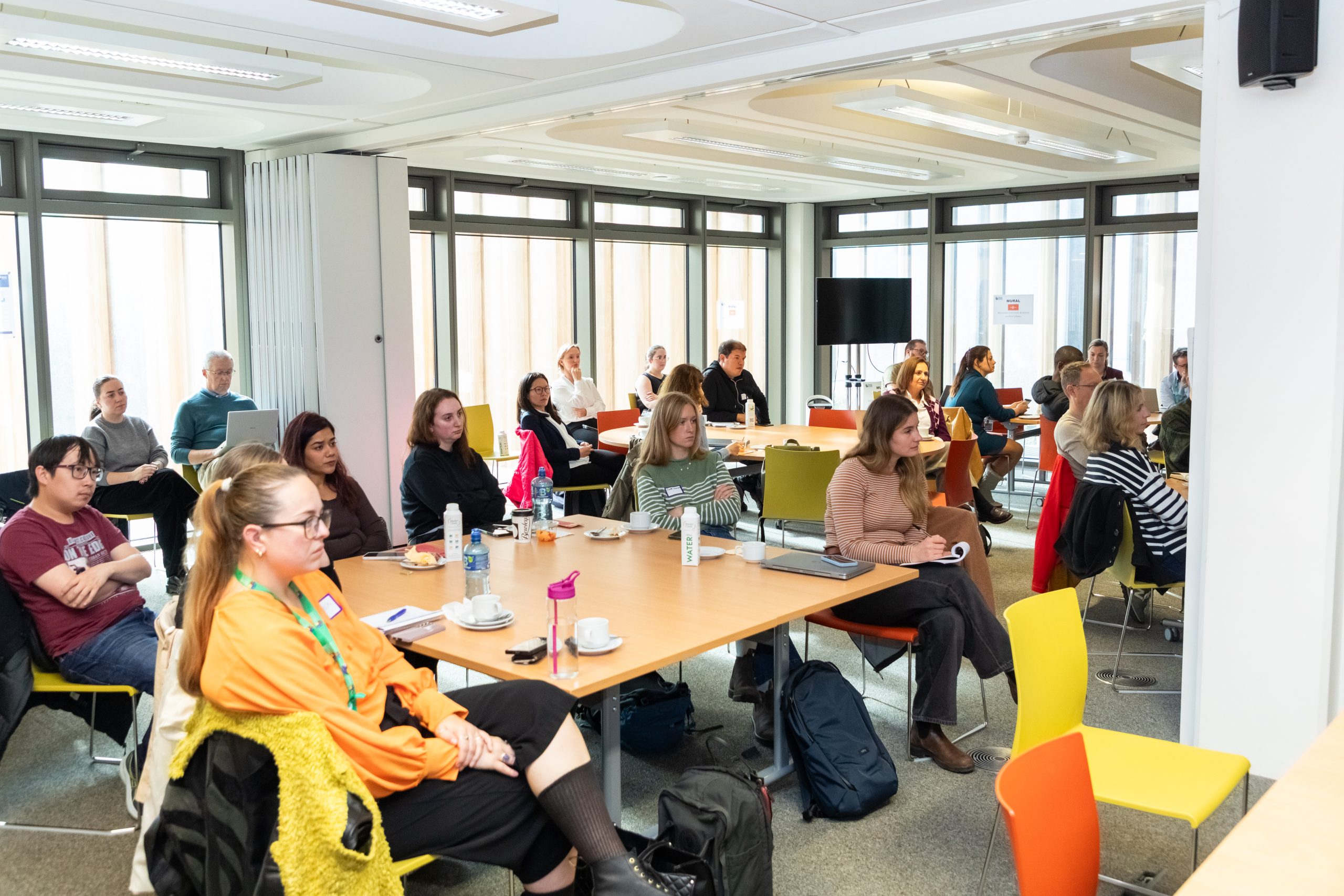
Behind the scenes, Maynooth postdoc liaison Juliette Davret worked closely with the event organisers, especially Noreen Lacey (from the Research Development Office – RDO), to coordinate the event. Juliette helped shape the panel discussion, bringing in Rob Kitchin to share his perspective on ERC funding and supervising a research team.

The morning began with a series of 6-minute talks in which postdocs showcased diverse research, from energy justice and cosmology simulations to language models and healthcare innovation.  

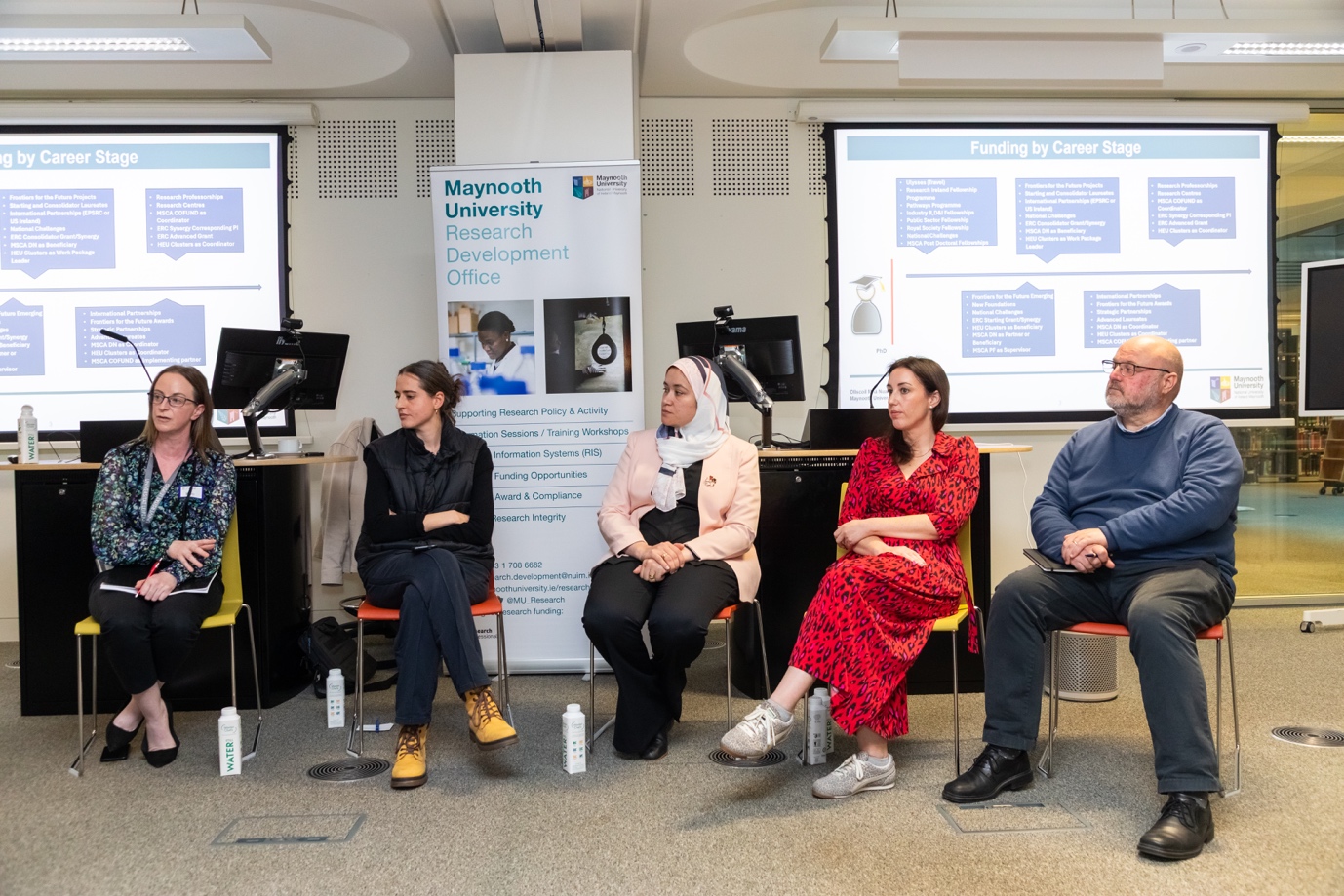
The following panel discussion on “Funding opportunities & building research teams” was facilitated by Patrick Boyle (RDO) and featured expert insights from the following speakers:

  • Eilish Lynch on career pathways
  • Dr Abeer Eshra and Dr Niamh Wycherley on Research Ireland Pathway Experiences  
  • Dr Guilia Gaggioni on Marie Sklodowska-Curie Fellowships  
  • Prof Rob Kitchin on ERC funding and the supervisor’s perspective

The talks emphasised the importance of tailoring grant application to align with what the specific funder values, clearly articulating the intellectual contribution, feasibility and broader impact of the idea. A strong proposal not only presets a solid concept but also communicates its significance and potential payoff in accessible, compelling terms.  

The event concluded with a networking lunch, allowing researchers to connect with colleagues and RDO staff – the perfect end to a morning of knowledge sharing and community building!  

Daft.ie for Noobs: Gaming Ireland’s property market by spoofing property websites 

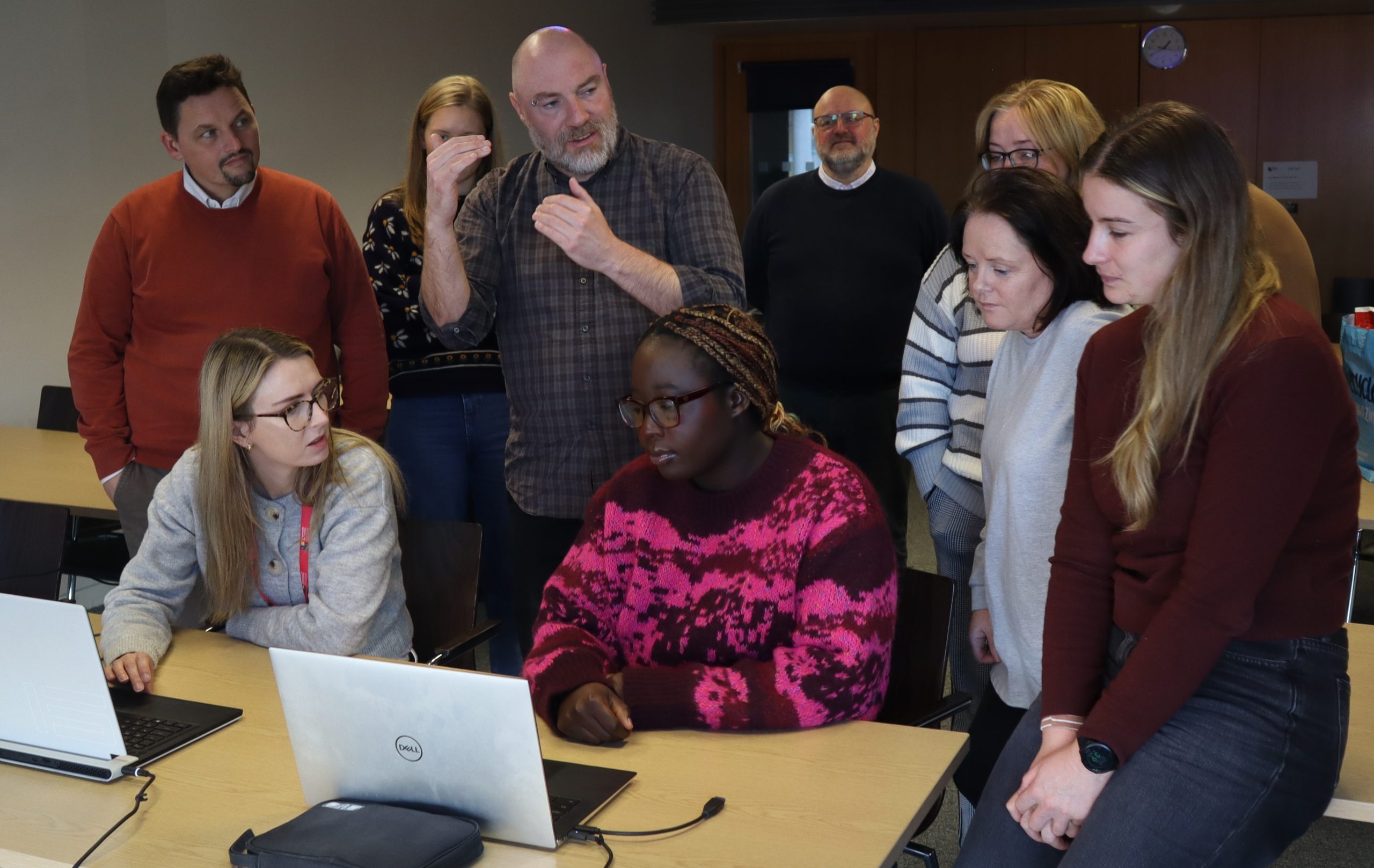
On the Thursday of Research Week, members of the Data Stories team hosted a 1-hour interactive workshop titled Daft.ie for Noobs: Gaming Ireland’s Property Market by Spoofing Property Websites. The talk was informed by the work of Oliver Dawkins, Ella Harris, Carla Maria Kayanan and Hannah Mumby who are working on a research project called ‘Commodity Narratives’. The event offered a behind-the-scenes look at how this team of creatives and researchers have been collaborating to interrogate the following themes in relation to the housing crisis in Ireland: a) the commodification of housing, b) the role of capitalism in shaping housing desires (and futures), and c) the use of digital games as a medium testing assumptions and gaining better understanding of peoples lived experiences.  

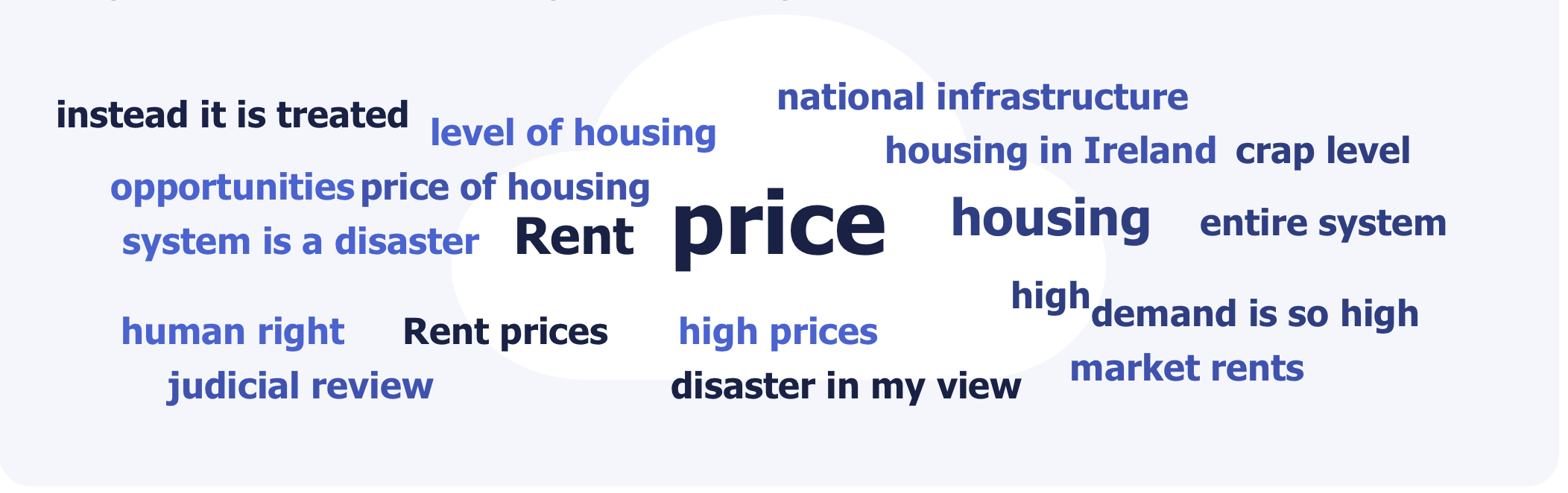
Prior to the workshop, the team sent a survey to participants inquiring into their personal housing journeys. Answers provided insight into frustrations that people deal with when navigating housing in Ireland. These insights also serve to inform the iterative process of website and game development and help to ensure that the work we produce is meaningful and relevant to an Irish audience. 

Example question: What (if anything) feels absurd about navigating housing in Ireland?  

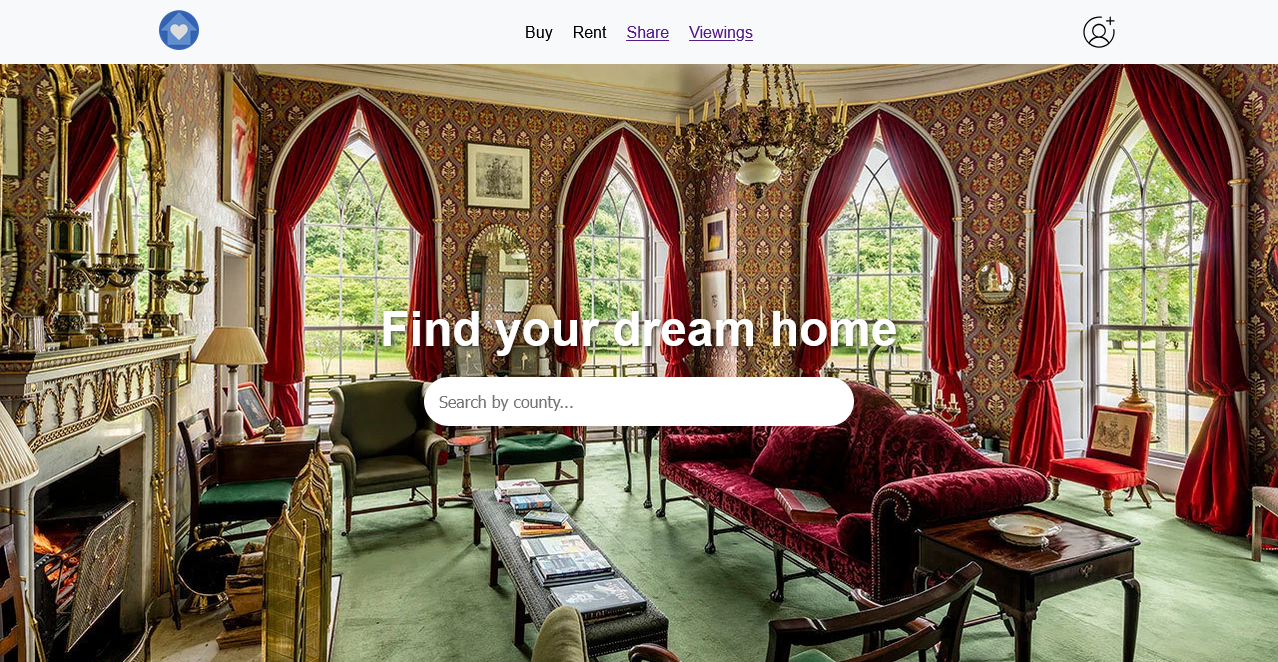
The aim of the workshop was twofold. We wanted to introduce the work to the Maynooth University community, but we also hoped to test our work in progress to receive feedback. Starting with a short presentation, the team described how creative experiments — from data scraping to gamified website prototypes — seek to expose the absurdities embedded the property market and the logics that underpin it. Following the introduction, Olly showcased early technical experiments underpinning the spoof property site which is modelled on familiar sites like Daft.ie and MyHome.ie.

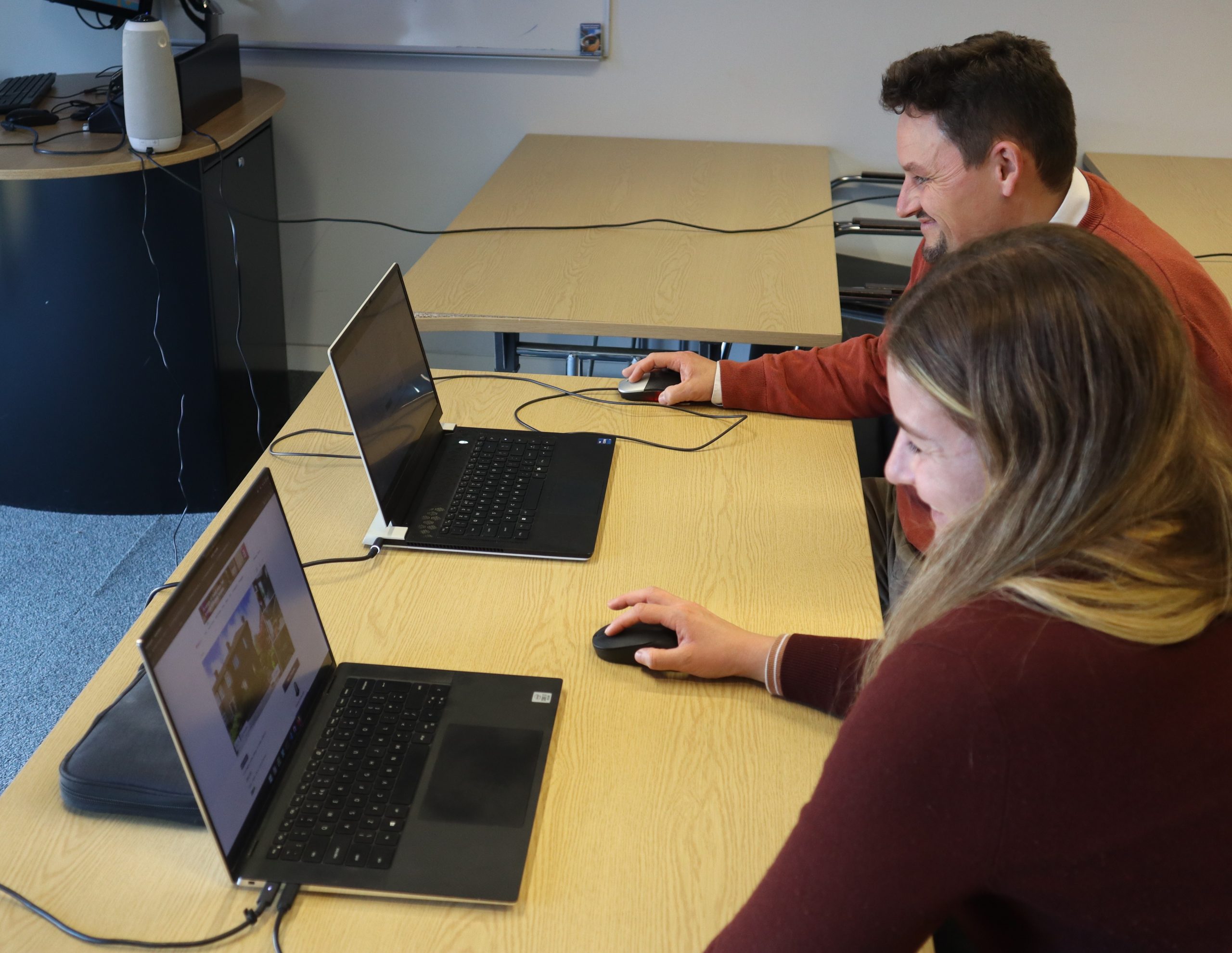
Participants were then invited to interact with our website, which was embedded with games and various hidden Easter eggs to find which satirise different aspects of Ireland’s property market. Links to pages which dump you on the Craigslist for shared rooms are just one example, mirroring the bitter experience of many student renters who are unable to secure more private accommodation. 

The work is still in progress; including the research informing the webpage, design coherence and mechanics. We hope to deliver a website that sufficiently mirrors popular property websites in Ireland but that the user journey is slightly off, surprising and ultimately jarring so as to provoke reflection on the commodification of housing.

Of course, we also want site visitors to enjoy the satire and have fun! 

To learn more about the early stages of the Commodity Narratives case study and the iterative creative process, visit the Data Stories website previous post: How do commodity narratives influence housing desires and life journeys?


Want to share this? (click + below for more options)