In 2025, Juliette Davret was awarded a Young Visiting Scholar Grant from the Maison des Sciences Humaines de Bordeaux (MSHBx), in connection with the research project Trajectories, Practices and Challenges of Digital Data in Governance. The grant enabled her to work with Prof. Matthieu Noucher and make three research visits to Bordeaux in 2026.
Together, these visits gave shape to a year of conversations, collaboration and event organisation. They culminated in the study days “Geodigitisation of the World: Infrastructures, Practices and Political Issues,” held at MSHBx from 6 to 8 October 2026.
January: setting the direction
Juliette’s first visit, in January 2026, helped establish the direction of the scholarship and plan what the coming months might make possible. During the stay, she decided to organise a conference bringing researchers together to discuss how digital technologies and data shape our understanding and experience of space.
It was also an important opportunity to meet researchers at the PASSAGES laboratory and MSHBx, build connections, and discuss shared interests. Those early conversations helped turn an initial idea into an interdisciplinary event.
June: research and public engagement
Juliette’s second visit took place in June, alongside events connected to SPHEROGRAPHIA, the ANR-supported research project led by Matthieu Noucher. A highlight was the launch of the exhibition Un globe, des mondes at the Musée d’Aquitaine and the Géodock at the Bordeaux Montaigne University campus.
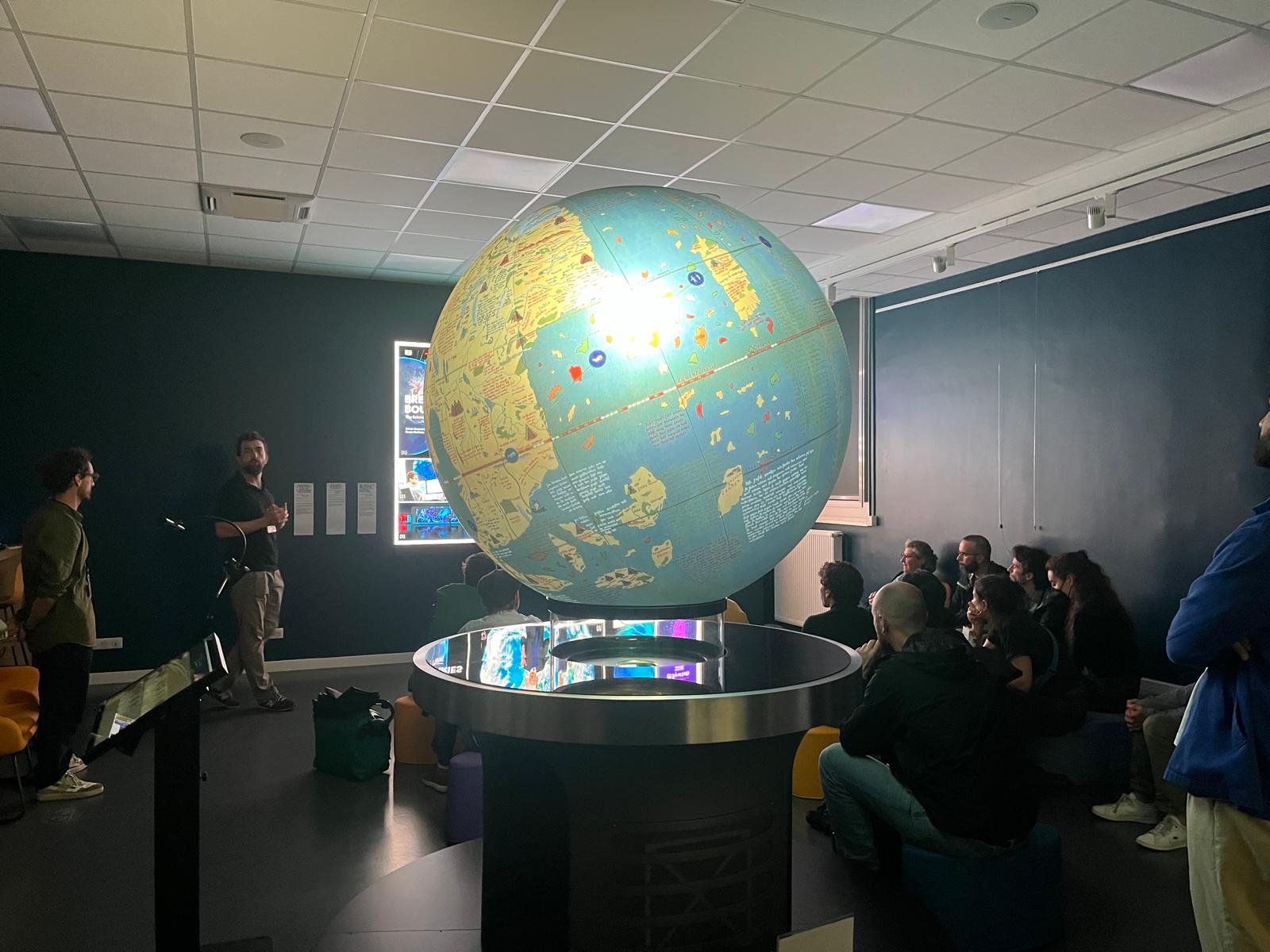
The exhibition explores contemporary representations of the world and the political and cultural implications of virtual globes. Bringing research into dialogue with artistic work, it invites visitors to question the images and assumptions behind digital representations of the world, and to consider how these representations influence our geographical imaginaries.
October: three days of discussion and exchange
Juliette’s final visit took place in October and centered on organising the study days “Geodigitisation of the World: Infrastructures, Practices and Political Issues.” The event brought together around 30 speakers over three days, with more than 50 people in the audience.
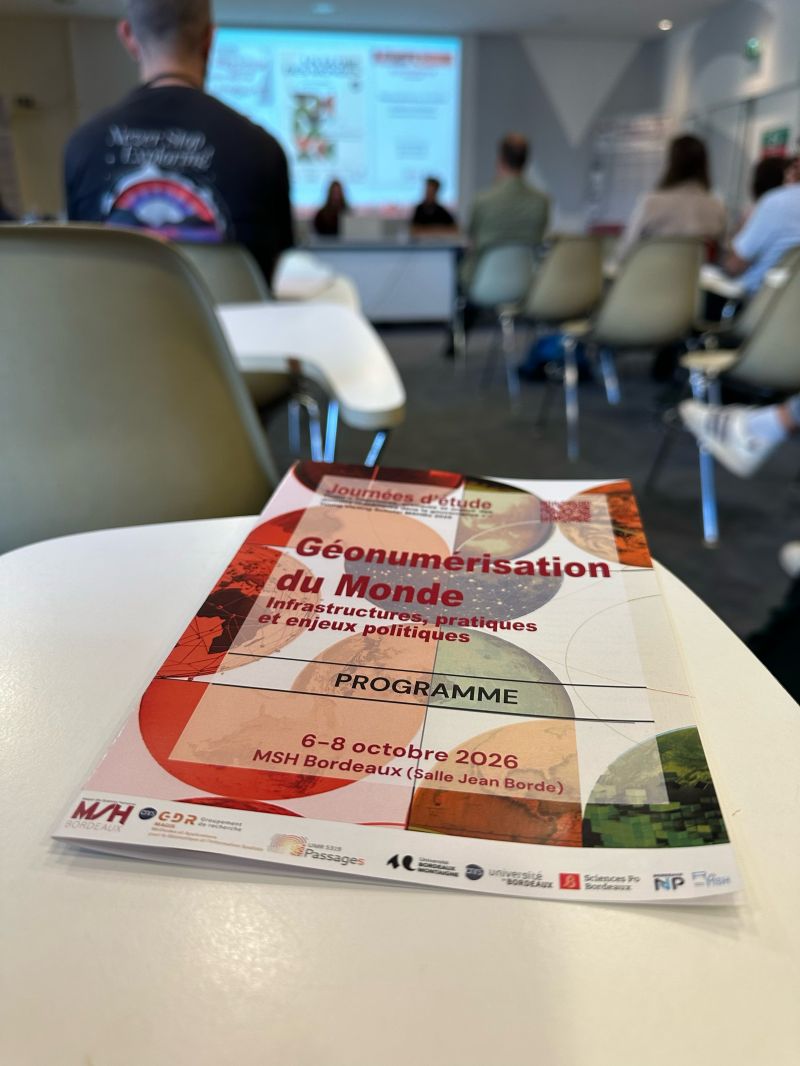 Credit: Pierre-Olivier Mazagol
The programme explored how the growing translation of places, activities and phenomena into digital data changes the ways people represent, govern and experience the world. Across presentations, discussions and workshops, contributors considered digital infrastructures and spatial data; inequalities and blind spots in mapping; the platforms and systems that shape the use of geographic information; and questions of sovereignty, politics and power. The program also addressed how social media, data and algorithmic systems influence spatial practices.
The study days moved between MSHBx, the Géodock in Bordeaux-Montaigne Campus and venues in Bordeaux city center. Alongside research presentations and round-table discussions, the program included a visit to the exhibition of Un globe, des mondes at the Musée d’Aquitaine, a public lecture by Alexandre Chollier, and a screening of Atlas Oculto at the Utopia theater. These activities extended the conversation beyond the conference room, bringing research into contact with artistic and cultural approaches.
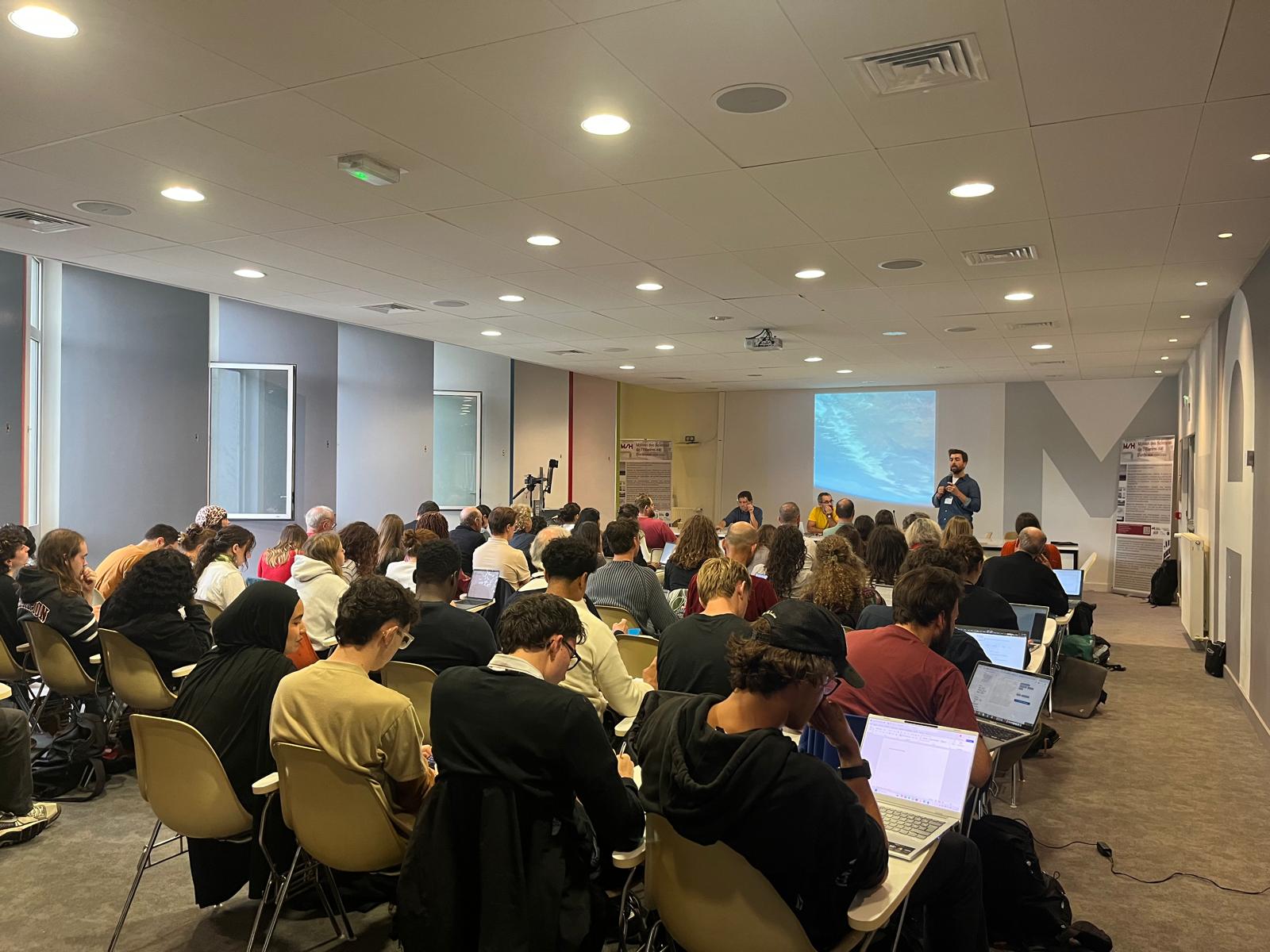
The event’s topic offered a way to look beyond individual maps or technologies and examine the wider processes through which the world is made measurable, comparable and calculable. Digital maps, GPS tools and spatial databases do more than describe places: they can influence decisions, shape everyday practices, and make some places or experiences more visible than others. The study days created space to examine these processes critically from different disciplinary perspectives.
The three visits and the conference were supported by a €6,000 grant from MSHBx. It contributed to travel and accommodation costs and helped make the event possible. Juliette is especially grateful to the MSHBx staff for their generous support throughout her visits and for helping everything run smoothly. She is also deeply grateful to Matthieu Noucher for his collaboration and scientific guidance.