HOUSING EXPERTS PANEL – BOOK FORUM

Fictions, Frictions & Evictions invites you to join Rob Kitchin in conversation with a panel of housing experts — Mike Allen, Mick Byrne, Danielle Hynes, Ronan Lyons, Lidia Manzo, and Lorcan Sirr — to discuss their recent books and their diagnosis of the housing emergency.

The panel brings together a wealth of contemporary and historical knowledge about housing in Ireland. Ronan Lyons (TCD, Daft Reports) and Lorcan Sirr (TUD) are regular media commentators. Mick Byrne (UCD) pens The Week in Housing Substack. Mike Allen (Focus Ireland) has active practitioner knowledge of addressing homelessness. Lidia Manzo (Universitas Mercatorum) has undertaken extensive participatory research on social housing in Dublin 8, and Danielle Hynes (University of Sydney) is an activist researcher on tenants’ rights.

For booking see Eventbrite

For the full list of events, visit the Fictions, Friction & Evictions website.

Want to share this? (click + below for more options)

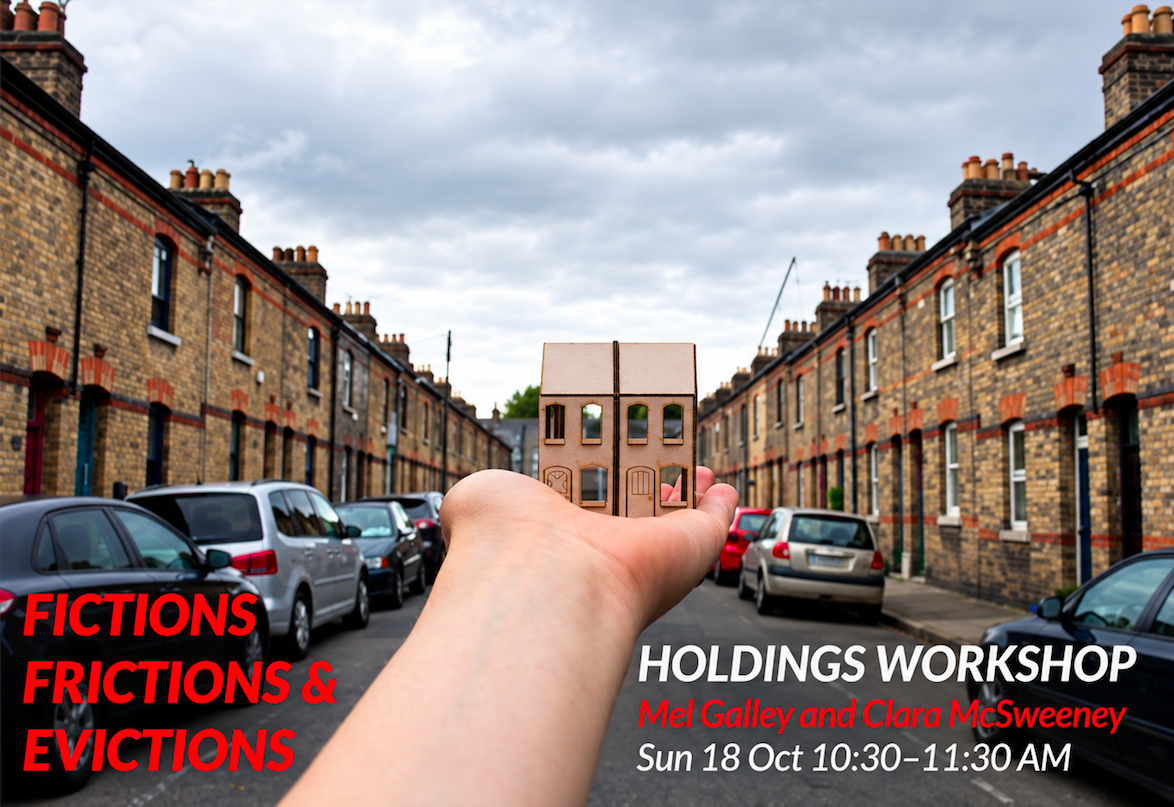
Holdings Workshop with Mel Galley and Clara McSweeney

Fictions, Frictions & Evictions invites you to join us for a one-hour participatory workshop that takes a closer look at the places we pass through every day.

Venue: iD8 Studio at The Gatelodge, Roe Lane, The Digital Hub, Dublin 8, D08 EY05

This workshop is inspired by the research and thinking behind Holdings, which is exhibited as part of Fictions, Frictions & Evictions.

Through walking, writing, observing and recording, we will engage with the streets surrounding The Digital Hub, using a handmade zine to document what we notice.

At the end of the workshop, participants will have the opportunity to contribute one of their reflections to the Fictions, Frictions & Evictions exhibition library.

No prior knowledge or experience is needed; the workshop is an invitation to slow down, notice and hone in on the places we interact with every day.

For booking see Eventbrite

For the full list of events, visit the Fictions, Friction & Evictions website.

Want to share this? (click + below for more options)

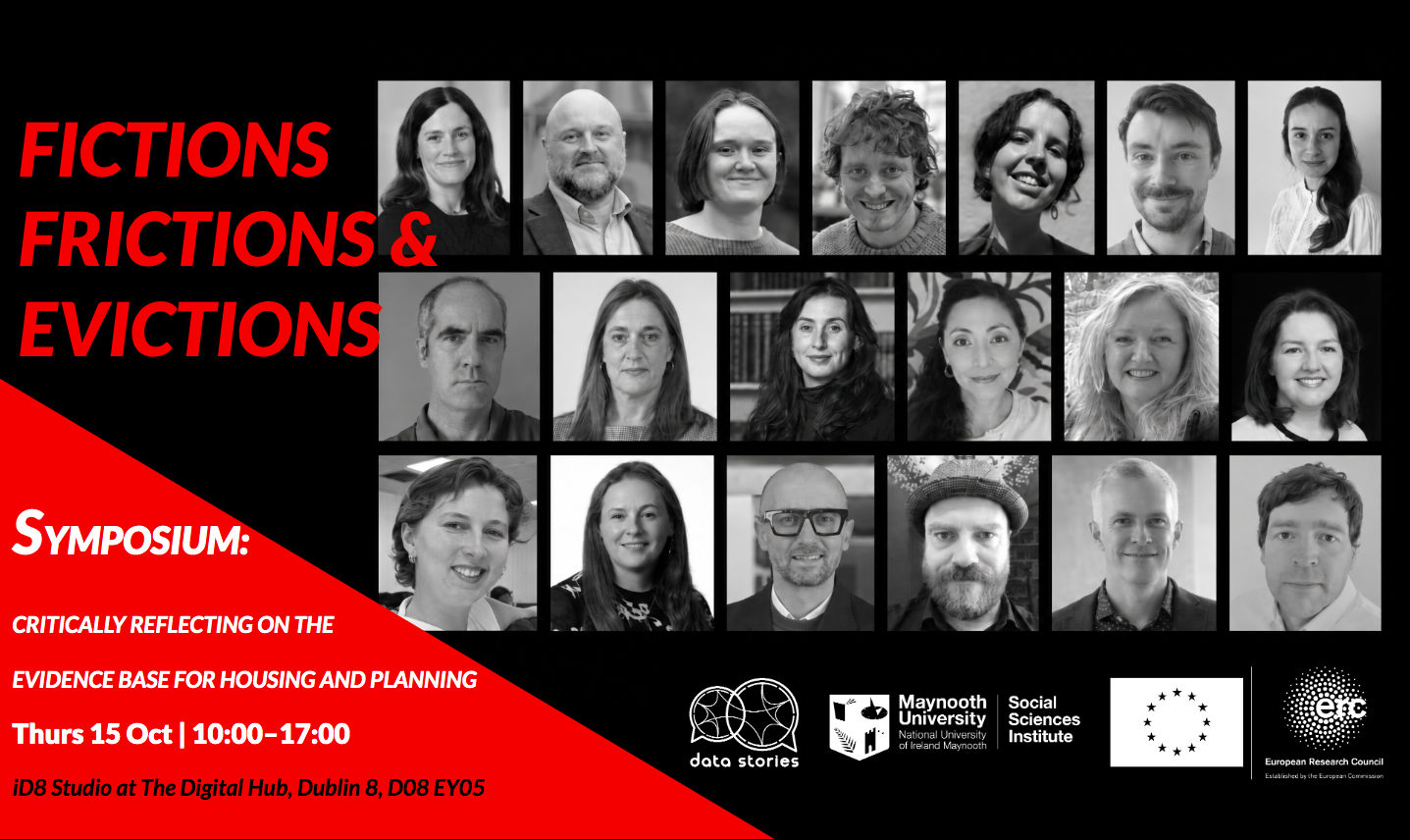
Symposium: Critically Reflecting on the Evidence Base for Housing and Planning

FICTIONS, FRICTIONS & EVICTIONS INVITES YOU…

SYMPOSIUM: CRITICALLY REFLECTING ON THE EVIDENCE BASE FOR HOUSING AND PLANNING

Venue: iD8 Studio at The Gatelodge, Roe Lane, The Digital Hub, Dublin 8, D08 EY05

How do we come to understand the housing crisis in Ireland? How do policymakers and businesses use evidence to make housing-related plans and decisions? How comprehensive is our housing and planning evidence base?

Join the researchers for the Fictions, Frictions & Evictions exhibition and guest experts for a series of roundtables discussing how housing and planning evidence is produced, shared and used, and the present limits to our knowledge and its implications.

As well as university researchers, the symposium includes speakers from the Department of Housing, Local Government and Heritage, the Housing Agency, Land Development Agency, Office of the Planning Regulator, Central Statistics Office, Irish Planning Institute and Jacobs Consultants.

Designed to include the voices of the audience, come and participate in discussions about the present state of play in evidence-based housing and planning in Ireland.

For booking see Eventbrite

Want to share this? (click + below for more options)

Fictions, Frictions & Evictions – Upcoming Data Stories Exhibition

We are delighted to announce our upcoming exhibition…

Fictions, Frictions & Evictions

Understanding Ireland’s Housing Emergency through Data Stories, Public Knowledge, Art & Activism

Since independence, Dublin has endured consecutive housing crises, from overcrowded tenements and appalling sanitation to unaffordable homes, stigmatised public housing, speculative development, displacement and homelessness. Generations of Dubliners have suffered the consequences of gentrification and repeated political failure. Perhaps nowhere have these failings been felt more than in Dublin 8.

Evidence-based policy should address these crises and improve residents’ lives, but it has failed across multiple generations. Do we also have a crisis of evidence?

Funded by the European Research Council, over the past 4 years, the Data Stories project at Maynooth University has investigated the stories, politics and power embedded in housing and planning data, exposing how housing and planning data are generated, circulated, governed and used.

Fictions, Frictions & Evictions, curated by Brendan Fox, confronts the data and systems shaping Ireland’s housing emergency and the human consequences hidden behind their numbers.

Working with artists in residence, Augustine O’Donoghue, Mel Galley, Ella Harris & Hannah Mumby, Helen Shaw, Joan Somers Donnelly, and Sean Borodale, project collaborators Conor McCabe and Clara McSweeney, and invited artists and activists, Conor Burke, @the_liberties_sos – Abaigeal Meek & Jack Caffrey, the exhibition explores housing evidence through film, installation, image, speculative fiction, performance and activism. At its centre, a Public Access Library (PAL) brings this research into direct conversation with community-produced knowledge, wider literature, and the CATU Archive of Housing Justice.

The exhibition will be accompanied by a series of artist talks, conversations, and performances.

Fictions, Frictions & Evictions officially opens on Friday, 16th of October at 6 pm at The Bank, 85 James Street, Dublin 8, D08 C2PR. Daily exhibition opening times: 11 am – 5.30 pm, and runs until Saturday 24th of October.

For listings of all events, see our dedicated exhibition website: Fictions, Frictions & Evictions

Image Credit – @the_liberties_sos

Want to share this? (click + below for more options)

RC21 Conference: Inequalities and The City  

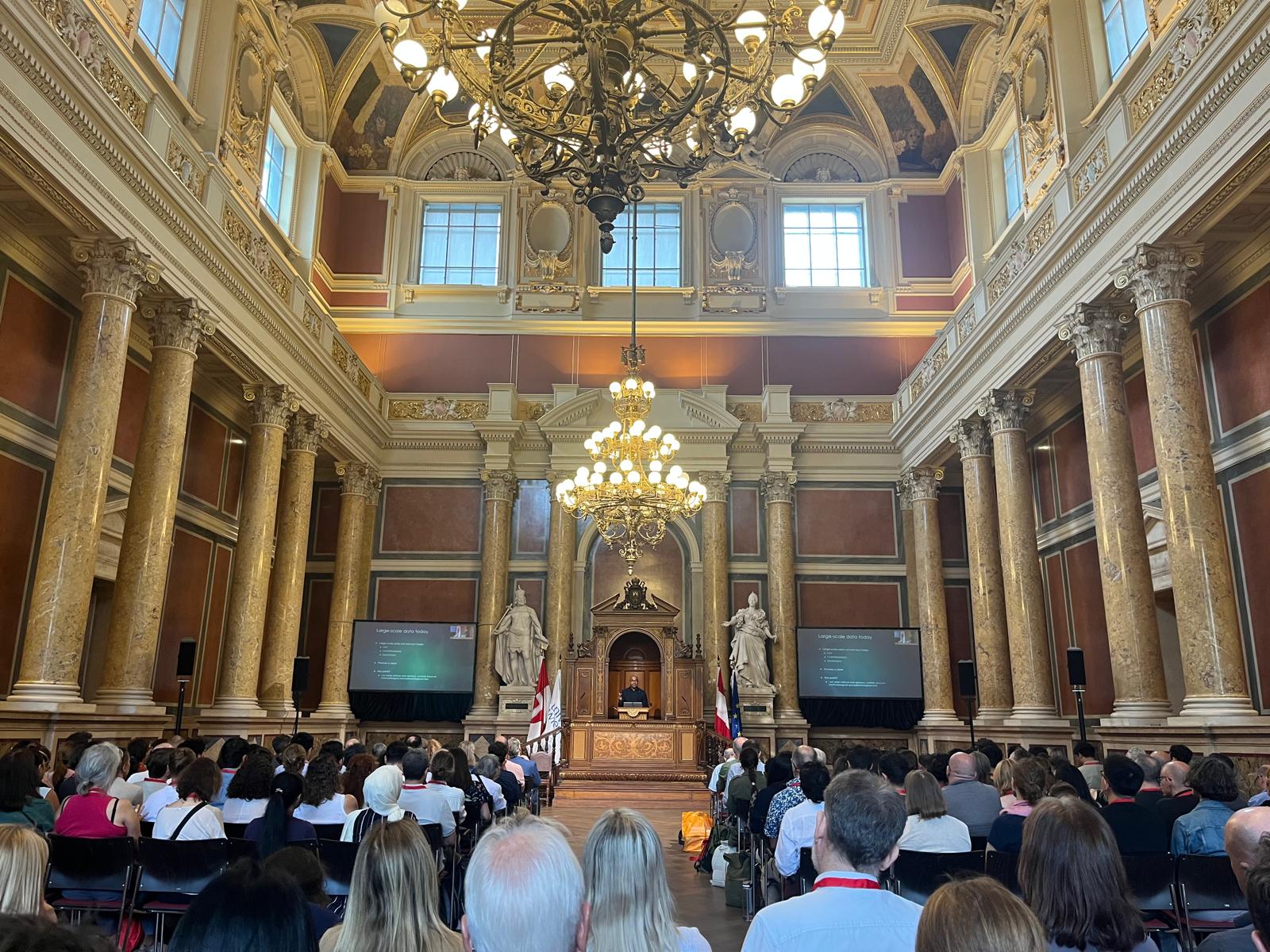
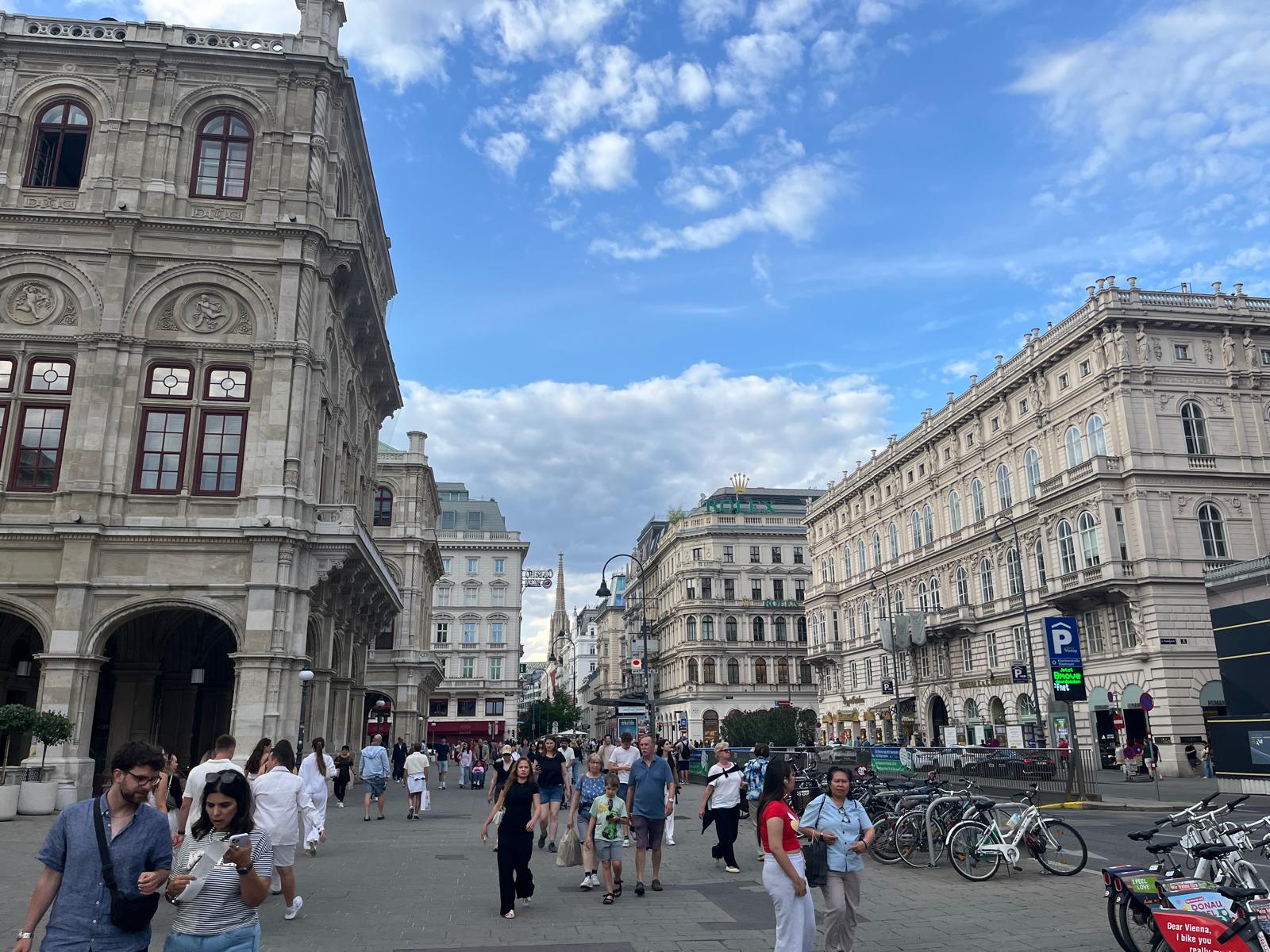
The RC21 Conference on Urban and Regional Development, held from 20-22 July 2026 at the University of Vienna, brought together hundreds of researchers to examine the theme: “Inequalities and The City: Old Issues, New Challenges”. As urban populations grow, so do disparities in housing, social segregation, and political power, issues exacerbated by climate change, conflict, and globalization. This year’s conference tackled these enduring and emerging challenges, fostering critical discussion on sustainability and urban coexistence.  

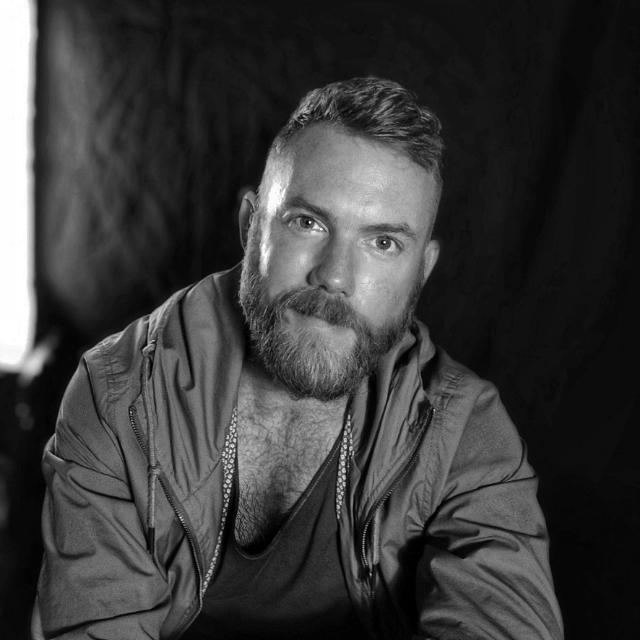
Image: Mario L. Small, keynote speaker on “Large-scale Data and understanding economic inequality”.  

Among the highlights was the Digital Frontier session, organised by Justus Uitermark and Ayona Datta, which explored how digital technologies – from AI to social media – reshape urban governance, labor, and knowledge production. The three consecutive sessions on this topic examined how corporations and governments extend control through digitisation, commodifying everyday life while creating new power dynamics.  

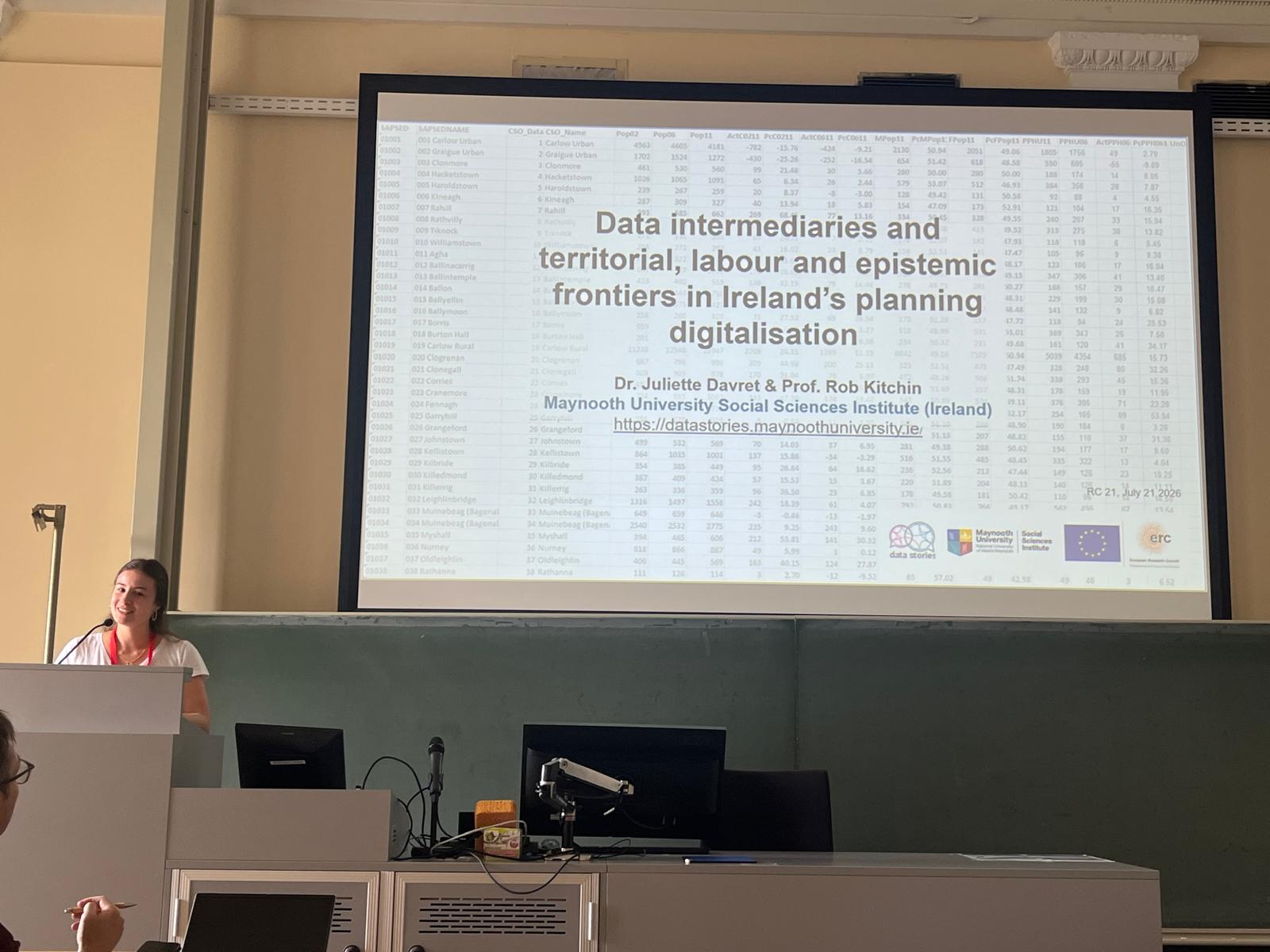
Juliette Davret presented her research titled “Data Intermediaries and Territorial, Labour, and Epistemic Frontiers in Ireland’s Planning Digitalisation” co-authored with Rob Kitchin. This paper analysed how private data intermediaries digitise planning records, transforming how spatial data is accessed and governed. Through a year-long case study, it examined how these intermediaries dissolve local boundaries, reconfigure professional roles, and create new regimes of visibility in urban development (e.g., searching for planning project based on price or scale, but not on community interests or environmental concerns). 

This presentation was part of a dynamic session alongside four other scholars, focusing in particular on the complexities of digital frontiers in planning and governance, addressing topics such as augmented reality in Indonesia, GIS practices in a master’s program in India, predictive slum mapping with geospatial technologies and urban digital twins in France.  

The conference concluded with a thought-provoking walking tour of Vienna, focusing on “hostile design”, urban elements like anti-homeless benches, and exclusionary public spaces that reflect deeply entrenched inequalities.  

Overall, the RC21 Conference was a great success. Thanks to the organising board for putting together this conference, which offered many opportunities to meet new colleagues, exchanges ideas, and learn how to address inequalities in cities!  

Want to share this? (click + below for more options)

Data Stories welcomes four new team members

The Data Stories team are delighted to welcome four new members to our team. Three of the new starters will be using their expertise in housing, planning, property and geospatial analysis to help further our research in these areas. We also have a curator joining the team who will be helping us plan and realise a forthcoming exhibition which is currently scheduled to take place in Dublin this October. 

Brendan Fox

Brendan is an independent curator, writer, lecturer, and cultural event producer based in Dublin and Rome. Brendan has been hired to curate our Data Stories exhibition in October. Brendan comes with extensive experience curating national and international artists in a broad spectrum of settings. They have held multiple residencies at the Irish Museum of Modern Art and have curated from the national collection. We are extremely excited to learn from Brendan and their curatorial choices that will shape the two-week exhibition in Dublin’s Digital Hub. 

Leah Aaron 

Leah will step into a postdoctoral position to conduct case study research on Northern Ireland. This research will complement the work we have completed on the Irish property and planning digital terrain and provide comparative insights. Leah is moments from completing her PhD in Urban Planning at University College London (UCL). She has extensive experience working with housing data and is well-placed to conduct detailed data audits and assess data quality. 

Leah Fennell Neville 

Samuel Mutter and Carla Maria Kayanan welcome SPUR awardee Leah Fennell Neville. Over the summer, Leah will work with Sam and Carla on their project, Critical inquiries and creative narratives: Exploring Irish data landscapes using arts-based methods to explore the data land issues that underpin important decisions shaping housing, planning and property development. In October, Leah will present findings to the MU community at the SPUR Undergraduate Research Poster Symposium. We hope the final creative output will also be featured at the Data Stories October exhibition. With thanks to MUSSI for awarding Sam and Carla the MUSSI Small Grants Scheme to fund Leah’s research experience! 

Sabreen Lyman 

Sabreen is a current MU student on the MSc in GIS/Remote Sensing in Geography. Over the summer, Sabreen will work with us to create a database of longitudinal datasets and to set up a data archive for the public. Sabreen will also produce material for our 3D printed model to help us build data stories for the October exhibition. 

We are grateful for the expertise each new member of the team is bringing and look forward to working with them. With this expanded team, the coming months promise to be among our most productive and creative yet. Keep following us here to find out what comes next.

Want to share this? (click + below for more options)

Data for Civic Urban Technology in Dublin, in Sydney and around the globe

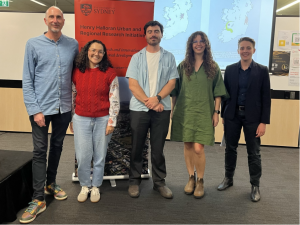
On Tuesday 28 April Danielle was invited to speak as a respondent to Dr Aline Cruvinel; architect, urbanist and researcher, and Murray Cox; founder of Inside Airbnb. Inside Airbnb is a mission driven project that provides data and advocacy about Airbnb’s impact on residential communities. The event, held through the Henry Halloran Urban and Regional Research Initiative Sydney, was titled From Inside Airbnb to Housing Justice: The Role of Civic Urban Technology, and hosted by Dr Claire Daniel.

Left to right: Murray Cox, Aline Cruvinel, Jack Moon, Danielle Hynes and Claire Daniel. (Photo by Greta Werner)  

Aline and Murray presented their recently published report on the threat of short-term rentals to housing, available here. The report takes a global data approach, connecting different spatial scales and assisting in explaining how short-term rentals operate at a global level, and the threat they pose to housing. This approach allowed Aline and Murray to identify the global impacts of Airbnb’s network, and argue that it ‘connects local housing markets to global tourism flows’ in a way that threatens long term housing. The report states the number of Airbnb listings per 10,000 inhabitants for many countries – demonstrating just how prevalent the platform is in many places, and analyses the impact of large events, such as the Olympic Games, on numbers of Airbnb listings.  

Murray went on to outline the origins of Inside Airbnb and some of the impact it has had, tracing in particular the case study of New York City, which has been relatively successful in effectively regulating Airbnb. In NYC registration has been introduced. Requiring hosts register assists regulation enforcement. This is combined with platform accountability, where Airbnb is fined for hosts who are not registered. This, along with other legislation, has dramatically reduced the number of whole premises Airbnb listings. Murray argues that platform accountability is essential for effective regulation for short term rentals. This puts the onus not only on hosts to follow the rules, but on the platforms to ensure hosts are doing so.  

Jack Moon then discussed his work analysing evictions in New South Wales (NSW). Jack is Data and Research Coordinator at the Tenants Union of NSW, a network of tenancy specialist legal centres operating across the state. Jack has been looking through court listings to identify how often community and public housing providers use termination proceedings (aka evictions), and which landlords do so most frequently. This work is open source, and those interested can check it out here.    

Finally, Danielle discussed the work of the Community Action Tenants Union eviction database group, particularly the work that went into the report and website, launched last year. Danielle gave a brief overview of publicly available evictions data in Ireland, and the work of the eviction database group in scraping and mapping legal and illegal evictions across the country, and pointed to the difference in available data in Ireland, compared with NSW (where only tribunal listing data is published). Danielle also briefly mentioned CATU Galway’s current ‘Break Up with Airbnb’ campaign, Inside Airbnb is supporting CATU in some of this work.  

Across all of the projects discussed at the event, both data, and those with the knowledge, skills and capacity to work with that data are essential to translate it into a comprehensible format that can make change in the world. This is a constant challenge in civic tech projects, where people are often working unpaid, fitting project work in around other commitments. Creating a broad group of people who are invested in seeing whatever the project is through to fruition, and maintaining it in an ongoing basis is an important consideration for this kind of work.  

Thanks to Claire Daniel, Nicole Gurran, Greta Werner and Jacqueline Tyrrell for organising an excellent event.  

Want to share this? (click + below for more options)

New book chapter: The Research Handbook on Digital Data is published!

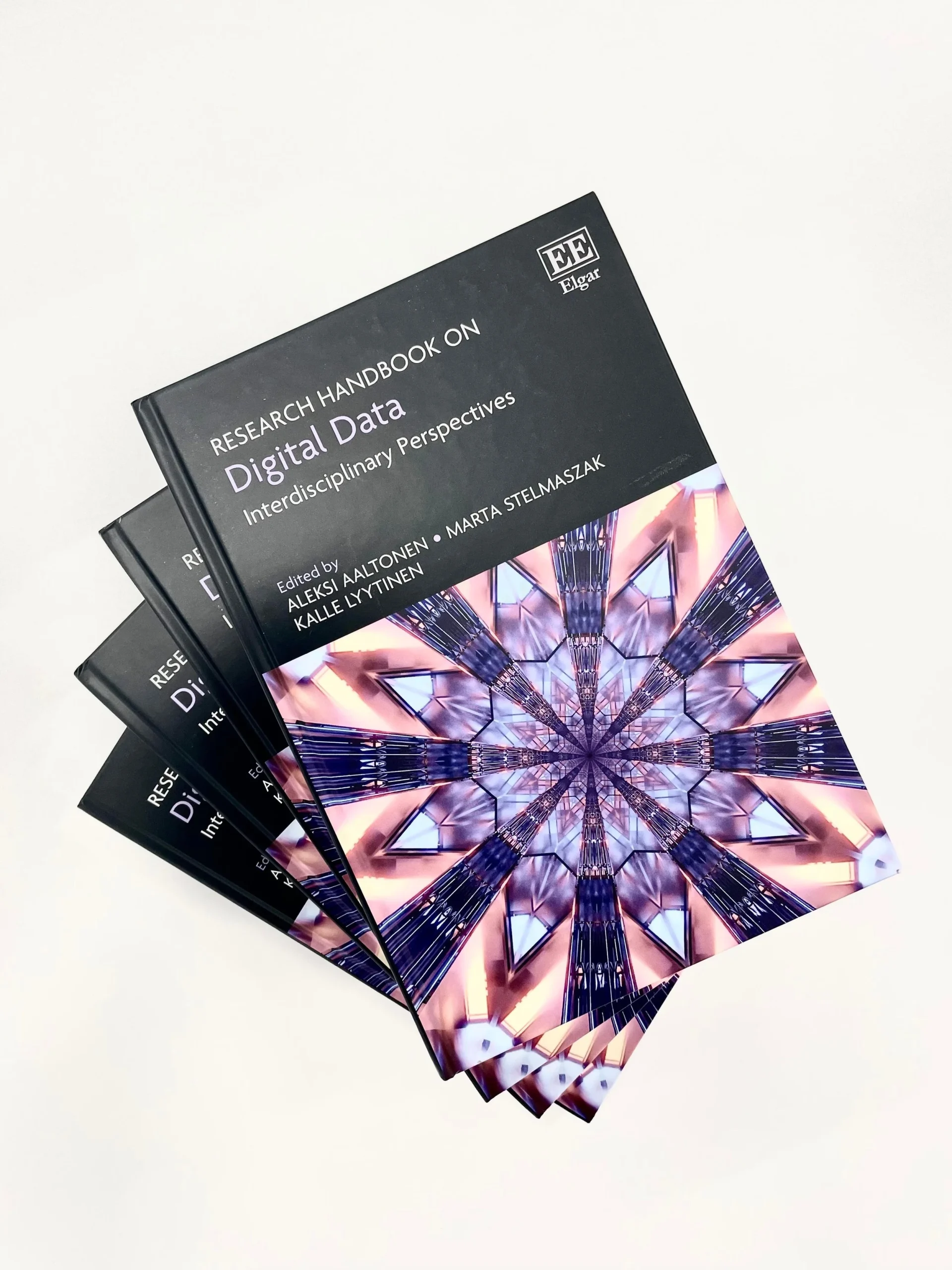
We are delighted to be part of the Research Handbook on Digital Data: Interdisciplinary Perspectives, a new volume bringing together scholars from a wide range of fields to investigate digital data and its growing role in contemporary life. The book delves into the role and consequences of digital data across multiple dimensions of organisational and social life.  

Spanning 408 pages, 24 chapters, and 56 contributors, this Research Handbook surveys critical scholarship across several disciplines, from management and sociology to economics and geography, building a solid conceptual foundation for understanding the growing significance of digital data in today’s world.  

The book is organised into six sections: an introduction, followed by Data Foundations, Data Design, Data in Practice, Data Governance, and Data Use, and closing with an afterword. Our contribution sits within Section 5 of the book, dedicated to Data Use. This section examines how the digital turn and data-driven systems are reshaping the way different domains are organised, managed or governed, as well as the practices implemented within them, and how this continues to evolve with emerging developments such as synthetic data or distributed machine learning. The chapters collectively raise and tackle both new and longstanding issues that demand social, political, regulatory and legal responses, around questions of privacy, ethics, data droughts and deluge, hallucinations and more.  

Our chapter “The nature and development of a planning data ecosystem” is accessible in our open access archive [here]. It examines the nature and development of data ecosystems through a comprehensive case study of Ireland’s planning development and control data ecosystems from 2000-2024. Using assemblage theory as a theoretical framework, we conceptualise data ecosystems as assemblages of data assemblages — complex socio-technical arrangements that evolve through non-linear, contingent processes. The Irish planning system demonstrates how data ecosystems develop through “jerry-rigging” over time, involving 31 local authorities, national agencies, and various digital platforms that create both functional workflows and significant data frictions. The research employs qualitative methodology including stakeholder interviews, system mapping, and data flow analysis to reveal how technical incompatibilities, organisational cultures, and resource constraints impede data mobility across the ecosystem. Despite operational challenges, the system functions through adaptation and ongoing reform initiatives. The study contributes to understanding data ecosystems as emergent, palimpsestic socio-technical configurations requiring further empirical and theoretical investigation across sectors and domains. 

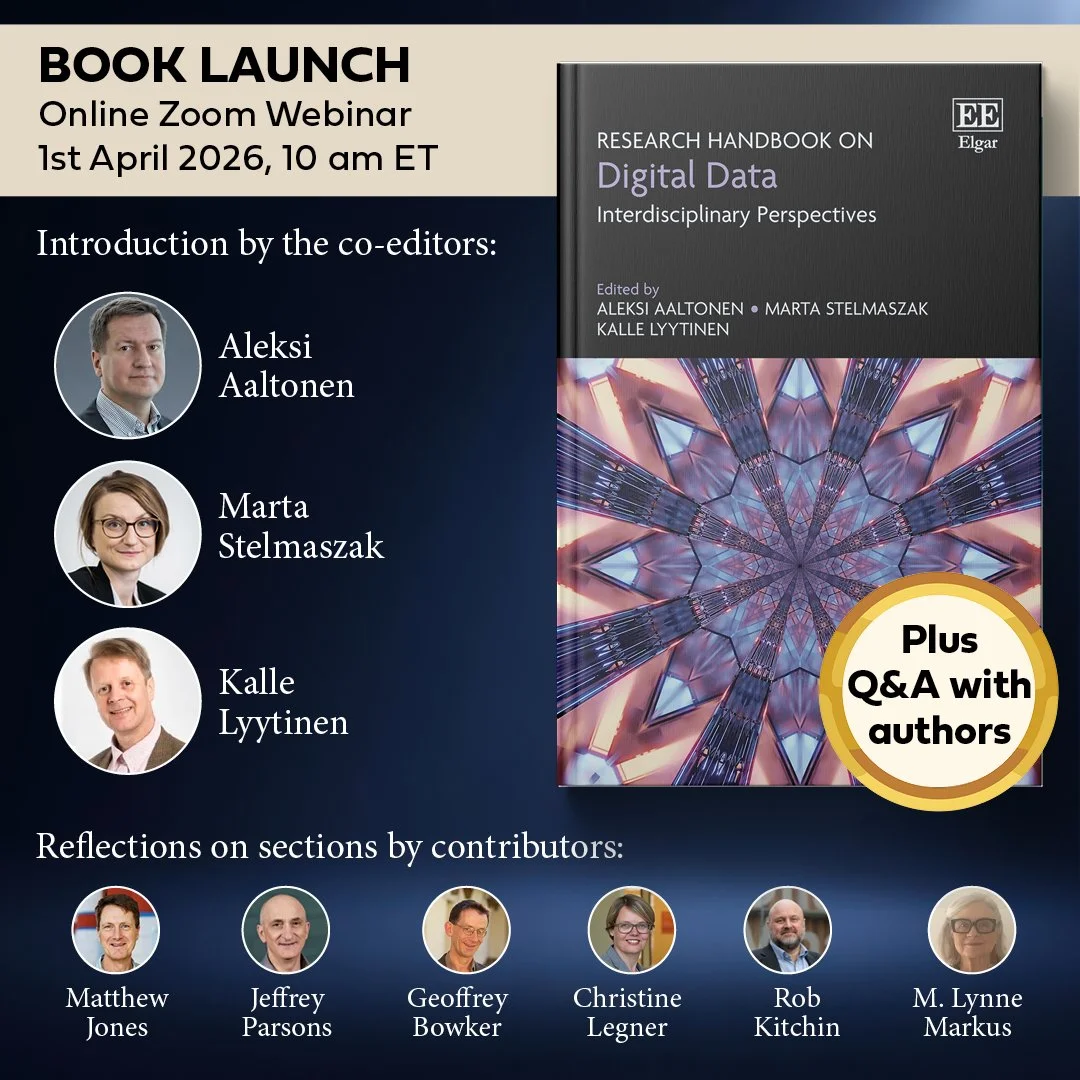
The book was launched on April 1 by its editors Aleski Aatonen (Stevens Institute of Technology), Marta Stelmaszak (Isenberg School of Management, University of Massachusetts Amherst) and Kalle Lyytinen (Case Western Reserve University).  During the launch, Rob Kitchin presented the section on Data Use where our chapter appears. The launch drew 138 live participants, and you can (re)watch the recording [here].   

It took almost exactly two years from the initial idea to the publication, and the Data Stories team is glad to be part of it!  

—————– 

Book chapter reference: Davret, J., Kayanan, C. M., Kitchin, R., & Mutter, S. (2026). The nature and development of a planning data ecosystem. In A. Aaltonen, M. Stelmaszak, & K. Lyytinen (Eds.), Research Handbook on Digital Data (pp. 324–342). Edward Elgar Publishing. https://doi.org/10.4337/9781035348718.00032

Want to share this? (click + below for more options)

Digital Planning in Zurich and Playing the Housing Market at BeNeLux Geography 2026

It’s the Spring teaching term, which means Carla has been busy with curriculum development, teaching and assessment. Regardless, Carla has managed to participate in two Data Stories relevant events, collecting a quirky pair of BeNeLux designed conference socks and a dinner in a charming fondue chalet overlooking the Zurich mountains! 

Land-Use Planning in the Digital Age: Processes, Impacts and Opportunities 
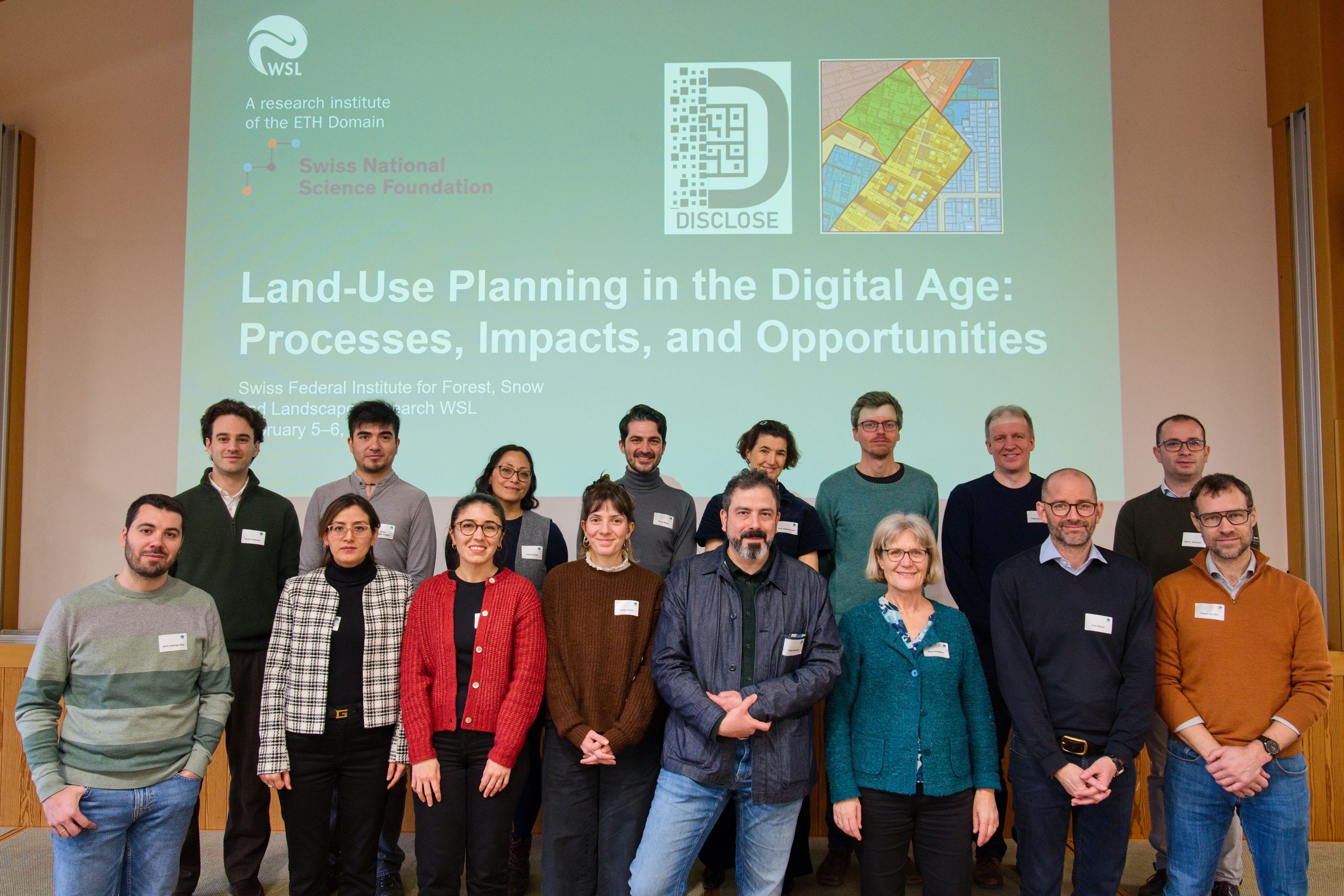
On 5-6 February, Carla was invited to attend the workshop, Land-Use Planning in the Digital Age: Processes, Impacts and Opportunities. The workshop was hosted by the SILAR and DISCLOSE project teams, both headed by Principal Investigator Prof. h.c. Dr. Anna Hersperger and held in the Swiss Federal Research Institute (WSL). 

Held over two days, the workshop included a series of presentations by the project team and by invited speakers representing both academia and the planning practice. Two central questions the project team were investigating were: 1) How does digitalisation reshape processes and practices? And 2) What are the promises and pitfalls of digitalisation in land-use planning? Both of these questions were underpinned by concerns around how research findings could make an impact for practice.  

What made this workshop stand out was its focus on methods to extract high level insights from all the participants. In addition to the standard format of speaker presentation followed by Q&A, Hersperger’s team incorporated activities such as short free writing sessions to stimulate discussion, round table discussions based on specific prompts, group work to determine gaps in our knowledge and fixed research questions for future research agendas. For example, the two central questions from above were whiteboarded in small groups. Each group considered answers to the questions and provided suggestions on theoretical gaps that remain unexplored and unanswered. Or for another example, the team created placemats for use during the lunch break and these mats had provocative comments such as: 

“Land-use planning in the digital age means modelling the future with GIS, big data, and algorithms—only to be surprised that humans still don’t behave like the model.” 

“Digital land-use planning: when the algorithm knows where everything should go, but not why no one wants it there.” 

Another stand out was the deliberate attempt to bring together researchers and practitioners from varying European countries. These types of workshops demonstrate how the academy has expanded in its effort to interject research into practice. Importantly, the work showcased demonstrated the innovative work happening in the WSL on the digitalisation of planning and the ongoing efforts to theorise how digitalisation is concretely impacting the planning profession. Many questions were raised and left unanswered—and indicator of the challenges the planning profession will grapple with in the transition to full digitalisation. 

Ultimately, the project team aims to co-produce a co-authored essay based on the workshop with all the involved participants; a large feat but a further example of how the project team worked to think outside the box and to create an outstanding, though provoking conference. 

BeNeLux Conference 

From 8 – 10 April, Carla attended the inaugural BeNeLux conference, held at KU Leuven’s campus in Belgium. Welcoming the audience on the first day, Ate Poorthuis explained that the origin story of BeNeLux is rooted in the desire for regional colleagues to network with each other without having to travel long distances or fly. This first inaugural conference drew over 530 registered participants, representing 27 countries and over 200 institutions. For Ireland, we had three nameless and unfindable registered participants, including Carla! 
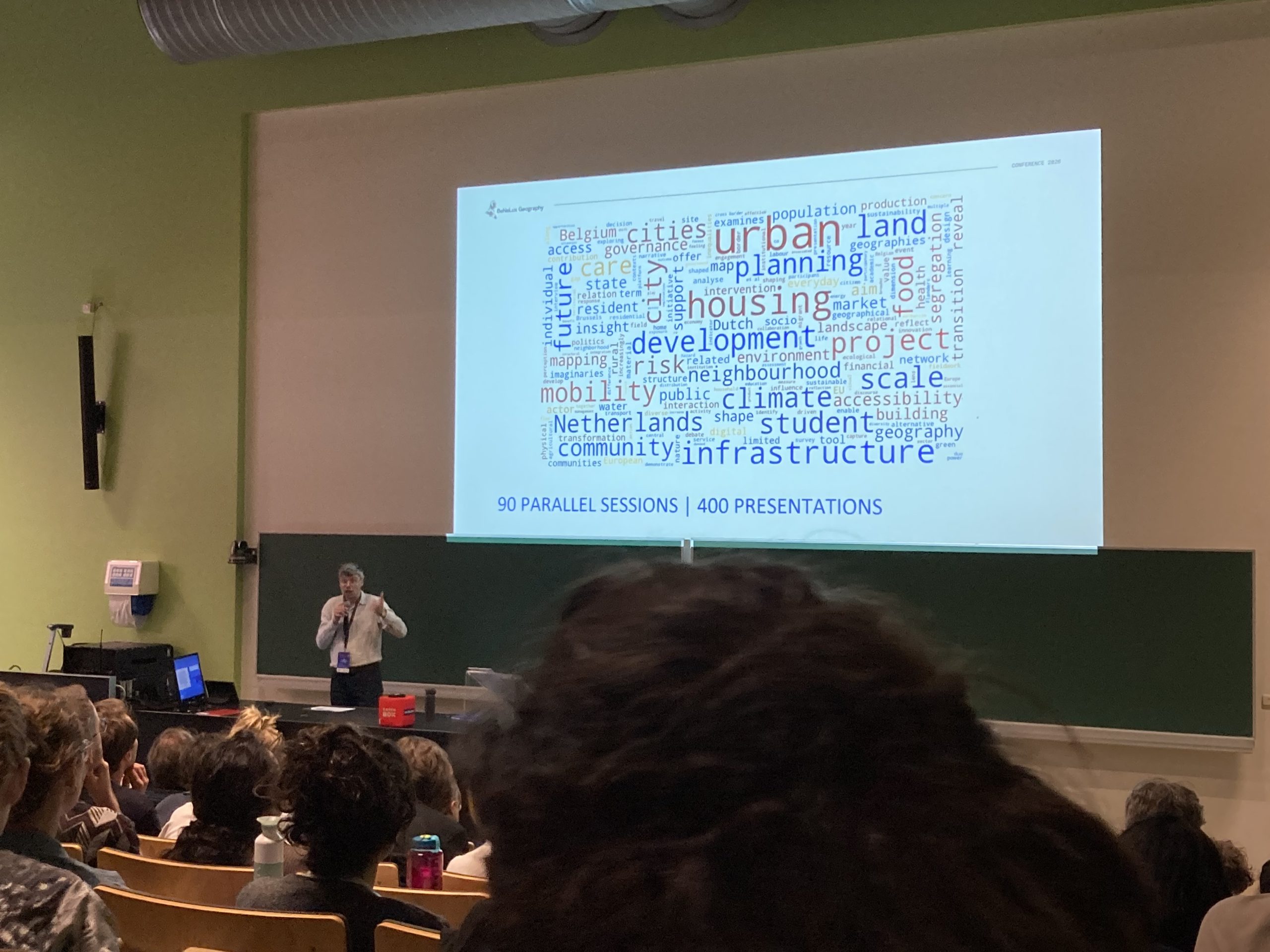
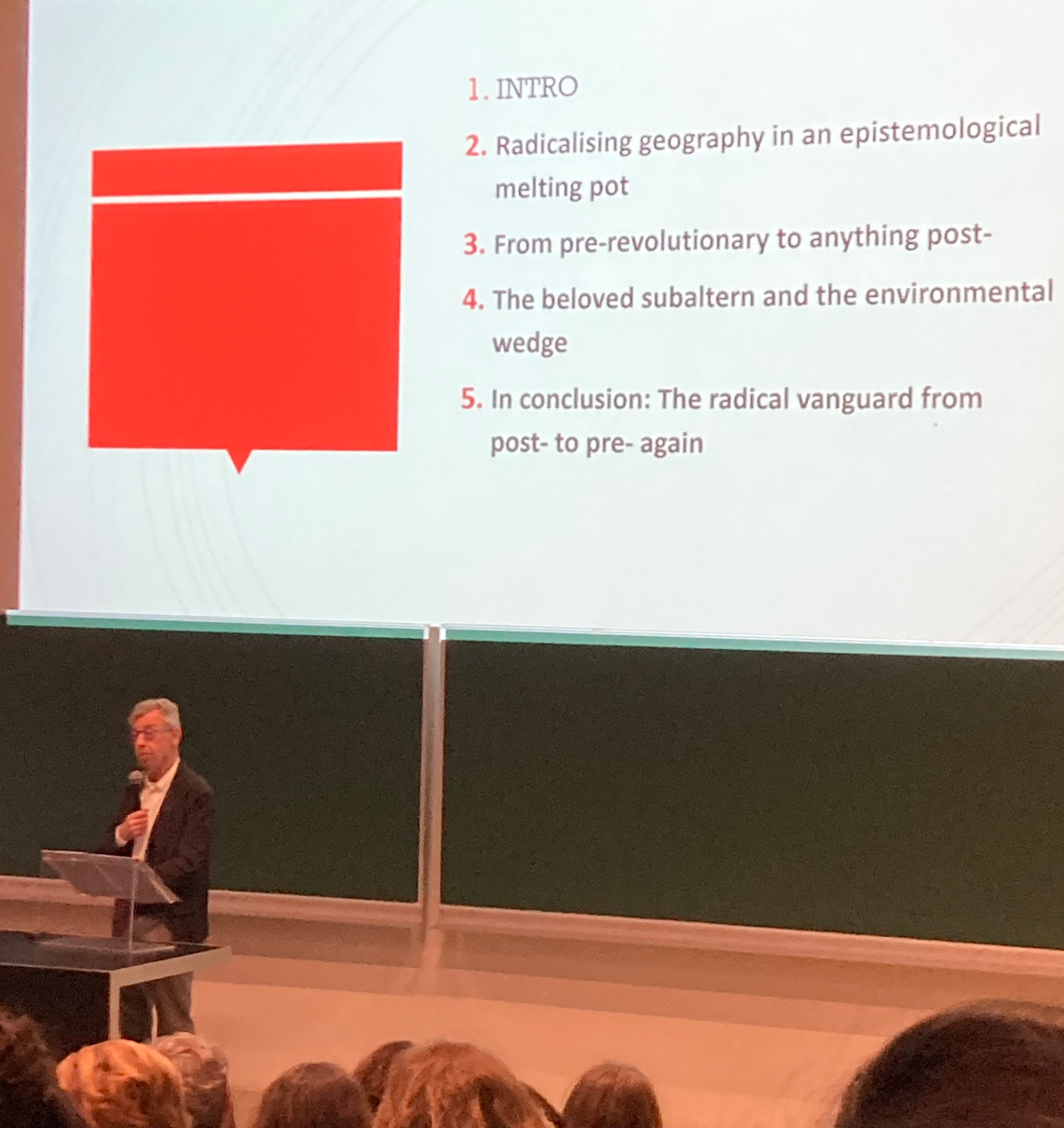
The programme for the conference included 90 parallel sessions, 400 presentations and, based on the many sessions attended, a healthy representation of Geography’s many sub-disciplines. Erik Swyngedouw, issuing the inaugural keynote address, provided a sweeping history of human geography, in a presentation aptly titled, Meandering Across Time and Space: A Geographical Expedition Through a Reactionary Discipline. What Swyngedouw covered was profound and too challenging to summarise in this blog post, but in his response to the prompt on the role of Geography in the past, present and future, Swyngedouw pointedly called out the need to break from intellectual dishonesty, to recognise that we are the architects of populist discourse and that we need to  name key mechanisms of struggle and speak truth to them. Importantly, he claimed, we need to specify our geographical desire and mobilise our intellect towards it, speaking truth to power in the process. 
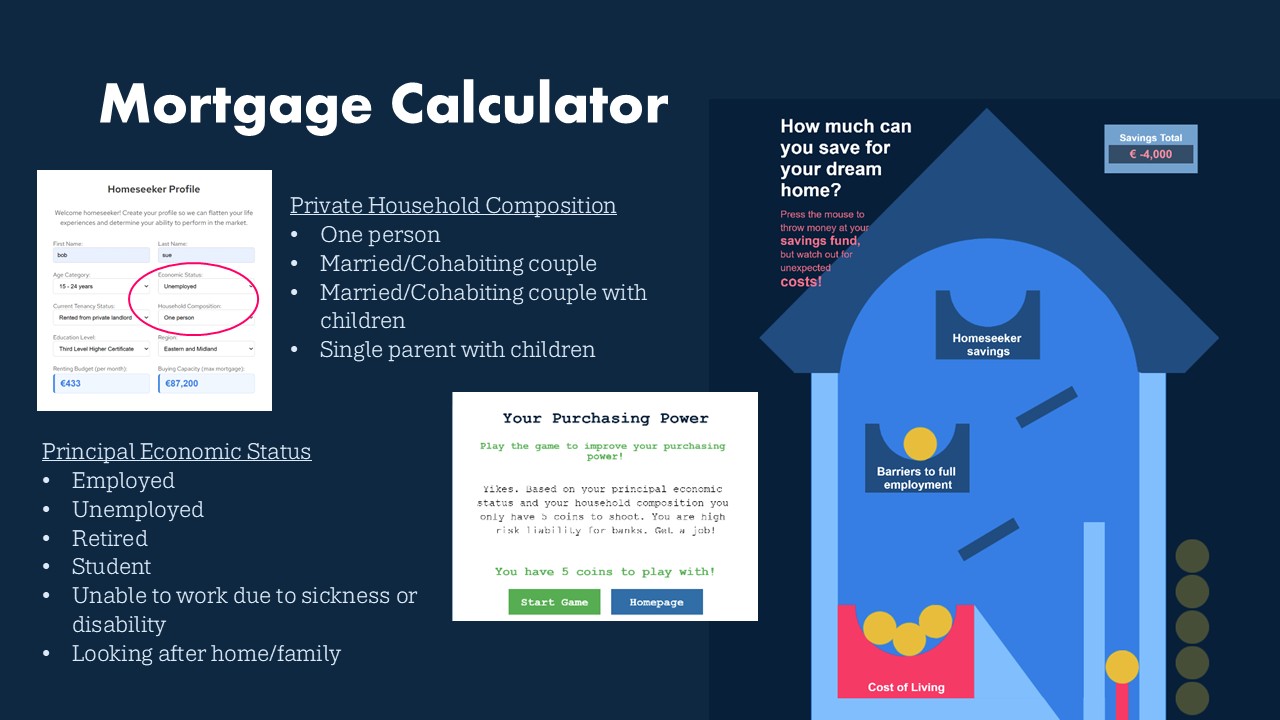
Our Commodity Narrative’s paper, Playing the Housing Market:  Creatively exploring housing commodification through a gamified spoof property website was scheduled for the second day of the conference. It was one of five papers the session co-organised by Bettina Van Hoven and Julia Munuera Garcia from University of Groningen in a special session titled Gamefying Geography: Play, Participation, and Pedagogy in the Geographical Curriculum. Though the session was designed to focus on the role of games to teach concepts in Geography, our Commodity Narratives work appealed to the organisers because of their long-standing interests in the use of arts-based methods and creative approaches to research. 
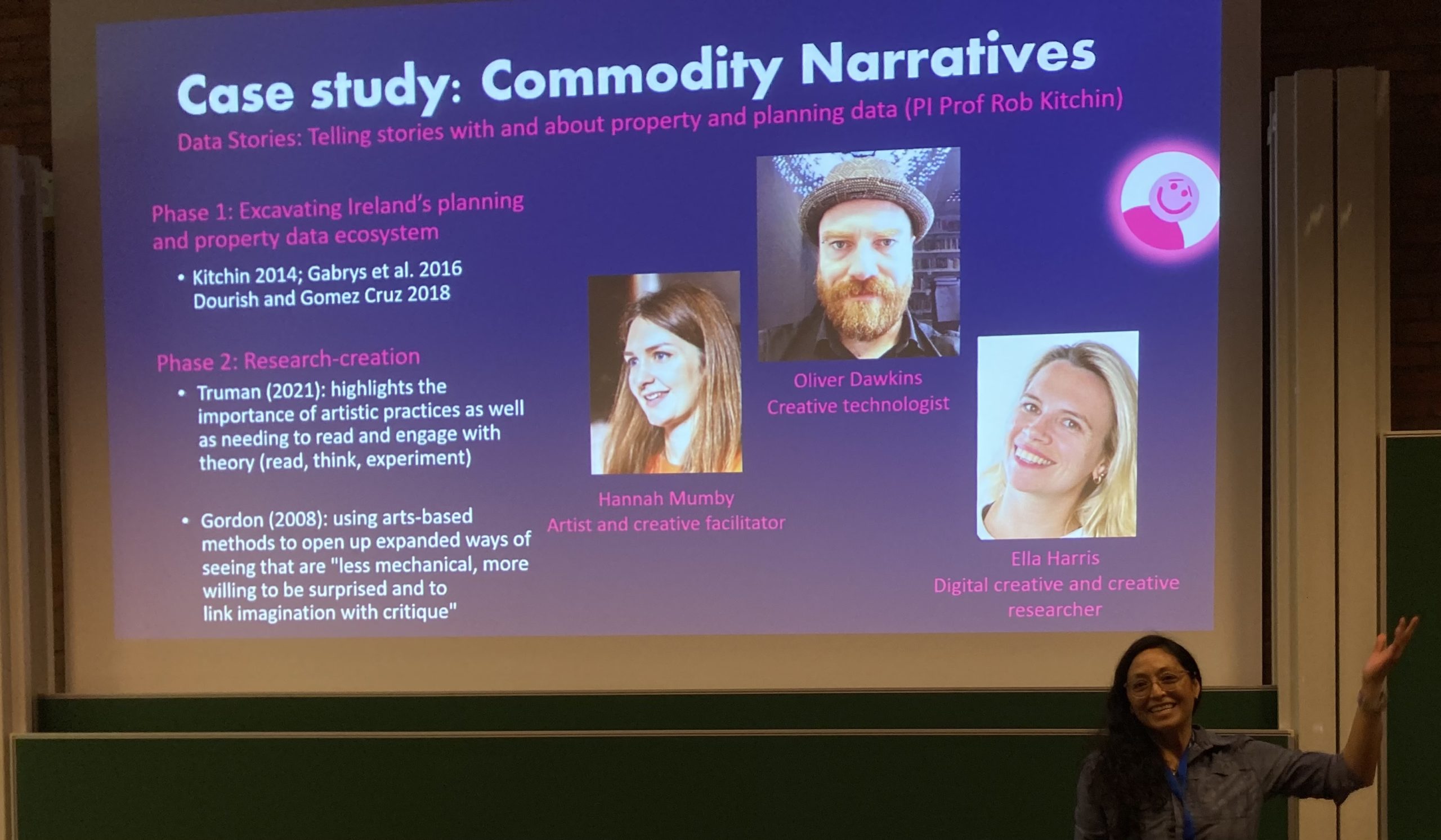
The greatest benefit of presenting the work were the questions from the audience that forced deep reflection on the Unreal Homes spoof property website we have produced: How does one win? What is the role of fun? What type of affective responses are you seeking from the users? These questions are critical to learn how to best define and describe our process on this case study, and to consider our individual and collective aims and objectives as we reach the final stages of finalising our satirical website Unreal Homes. Presenting the work and fielding questions has already led to provocative discussions amongst the team members. It was also rewarding to see Unreal Homes gleefully received from the conference attendees (one even remarked that the mortgage calculator was genius) and that even without access to the site to play it, the presentation of the satirical content and games alone elicited laughs from the audience.

Want to share this? (click + below for more options)

12 month postdoc post

Come and join the Data Stories team. We are seeking a postdoctoral researcher to work on the ‘Data Stories: Telling Stories About and With Planning and Property Data’ project.

Details about the post: https://my.corehr.com/pls/nuimrecruit/apply?id=040543

The postdoctoral researcher will undertake a comprehensive data audit of the data terrain of housing, property and planning in Northern Ireland, conduct interviews with key stakeholders with respect to selected aspects of this terrain, and compare the findings to a data audit and interviews already undertaken in the Republic of Ireland. For selected topics, such as the planning and development pipeline, a data audit and comparison will be undertaken with respect two additional countries. The successful candidate will have experience of sourcing and handling administrative datasets, be able to compile a data directory, compare datasets and evaluate data quality, and be able to conduct interviews and analyse the transcripts. They will have domain knowledge relating to Human Geography, Urban Studies, Planning, GIScience, Critical Data Studies, or related disciplines.

The posts will be for 12 months, with an anticipated commencement of 1st July 2026.

Salary
Post-Doctoral Researcher (2026): €46,805 – €53,391 p.a.(6 points)
Or Senior Post-Doctoral Researcher (2026): €54,851 – €59,655 p.a. (4 points)

Closing Date:
23:30hrs (local Irish time) on Tuesday 31st March 2026.

Want to share this? (click + below for more options)